




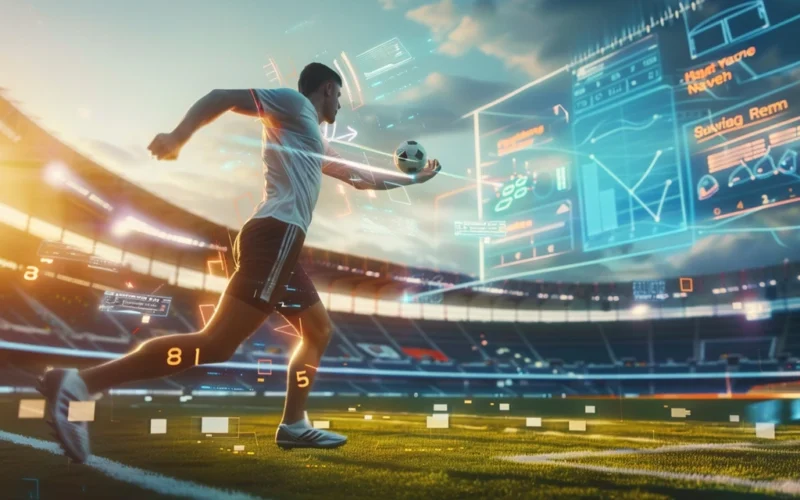
More than 20 major sports worldwide now use computer vision systems that can track the precise three‑dimensional path of a ballwithin a few millimeters, a level of precision human eyes could never achieve.
Coaches must adopt automated tracking to identify missed insights, prevent injuries, analyze tactics, and quantify skill improvements efficiently. Teams that are slow to adopt automated vision tools risk lagging behind competitors who extract objective, actionable insights from every practice session.
Even systems like Hawk-Eye, used in tennis and soccer, have set the benchmark for precision in tracking player and ball movement, but its capabilities extend beyond officiating into training optimization.
In this post, you’ll find seven practical sports training insights powered by computer vision and how they improve training outcomes more reliably than conventional methods.
Key Takeaways
- Computer vision enhances sports training by providing real-time performance tracking and predictive insights into movements, fatigue, and injury risks.
- Coaches benefit from objective, measurable feedback that helps optimize training loads and refine technique in real-time.
- Actionable metrics, such as joint angles, stride length, and posture, guide immediate adjustments, making training more efficient and precise.
- Teams using AI-driven tools can consistently measure athlete performance and prevent injuries by detecting early warning signs through biomechanical analysis.
- Computer vision enables customized training plans based on individual data insights, increasing long-term athlete performance and reducing injury risks.
How Computer Vision Enhances Performance Tracking in Sports Training
Computer vision systems usemachine learning and image analysis to interpret video frames, assigning numeric values to motion, posture, position, and event sequences. These systems are widely used for player and ball tracking, tactical analysis, and pose estimation.
In essence, they replace subjective observation with measurements derived from multiple camera perspectives, producing datasets that quantify performance across entire sessions.
Quantifiable metrics include:
- Player position and movement vectors.
- Velocity and acceleration profiles.
- Pose and joint alignment during dynamic movement.
- Event detection, such as passes, jumps, strikes, or sprints.
These metrics form the basis for objective performance programs rather than guesswork or selective highlights.
Benefits for Coaches and Athletes
Computer vision eliminates many limitations associated with manual review:
- Complete coverage: Systems analyze every movement throughout a session without human fatigue.
- Precision analytics: Joint angles, directions, and interactions are quantified, not described.
- Scalability: Teams can efficiently process hundreds of hours of footage.
Instead of reviewing selective clips, coaches receive structured analytical outputs that enable them to compare performance sessions, track improvement over time, and prioritize interventions.
Case Examples
Across professional sport:
- Player Tracking: Vision models generate precise player-tracking sequences that fuel advanced tactical analytics.
- Ball Tracking: Systems such as Hawk‑Eye are used in tennis, cricket, soccer, baseball, and volleyball to precisely measure ball trajectories, helping teams understand the play context.
These functions show how vision transforms raw video into detailed performance profiles.
Want to take your sports team’s training sessions to the next level? Codewave’s GenAI solutions integrate seamlessly with your existing systems to provide real-time performance feedback, injury risk analysis, and tactical insights.
As an AI orchestrator, we help teams optimize training outcomes with data-driven strategies, ensuring every decision is backed by measurable performance.
7 Key Insights in Sports Training Using Computer Vision
Computer vision transforms raw footage into actionable performance data that is far more precise than traditional methods. With tools like Hawk-Eye, Catapult Sports, and Zebra Medical Vision, teams now get detailed insights into player movements, fatigue, and technique in real time.
This data allows coaches to identify performance gaps, reduce injury risks, and tailor individual training plans, all backed by objective, quantifiable metrics rather than subjective analysis.
Insight 1: Real‑Time Player Movement Analysis
Computer vision captures player movement patterns with frame‑by‑frame precision. This includes changes in direction, stride adjustments, differences in acceleration, and sprint dynamics.
These measurements help coaches identify:
- Movement inefficiencies
- Motion symmetry or imbalance
- Positioning deviations between drills
This insight shows what the naked eye misses, such as slight posture changes under fatigue, and grounds coaching decisions in objective data.
For example, football and basketball teams use vision data to analyze offensive spacing and defensive transitions during training, which provides insights that traditional performance charts cannot reveal.
Insight 2: Injury Prevention Through Biomechanical Monitoring
One of the most valuable applications of computer vision is biomechanical analysis. Vision systems interpret how bodies move during training and identify patterns correlated with injury risk.
Body tracking and pose estimation can flag:
- Repeated asymmetrical movements
- Excessive joint stress
- Movement thresholds linked to common injuries like ACL tears
In ACL research and training scenarios, multi‑angle video analysis is used to evaluate risky landing patterns and knee alignment in real time, supporting preventative guidance before injury occurs.
These capabilities help trainers adjust loads or technique before damage occurs, reducing time lost to injury.
Insight 3: Enhanced Skill Development With Action Replay
Computer vision increases the value of action replay by embedding performance metrics directly onto video. Instead of merely reliving an athlete’s motion, these systems highlight key mechanical features such as joint alignment, torque generation directions, and motion segmentation scores.
Key functions include:
- Overlaying ideal movement templates against athlete performance
- Displaying motion metrics per frame
- Highlighting critical deviations from the target technique
This capability turns passive review into a detailed performance clinic, making practice time more productive.
Insight 4: Customizing Training Plans for Individual Needs
Every athlete’s body mechanics and performance profile are unique. Vision systems generate player‑specific metrics that allow coaches to build tailored programs.
Rather than generic goals, training variables adjust according to:
- Movement efficiency
- Load tolerance
- Strength and weakness profiles
When customized, training plans can directly target individual limitations, accelerating progress without raising injury risk.
Coaches can also track improvement over time based on data rather than periodic subjective assessments.
Insight 5: Analyzing Stamina and Fatigue Levels
Continuous performance monitoring lets teams quantify how an athlete’s output changes over repeated exertions.
Vision analytics can examine:
- Reduction in acceleration scores over time
- Variations in stride or movement profile
- Declining angular control or precision
These metrics reveal early signs of fatigue, before an athlete or coach might recognize it manually. Tracking stamina through visual metrics gives critical input for scheduling rest, refining drills, or adjusting conditioning emphasis.
This kind of analysis is especially important in sports that require high repetition and endurance.
Insight 6: Measuring the Impact of Technique Changes
When coaches introduce adjustments, such as changing a runner’s start stance or modifying a tennis serve, vision systems provide before‑and‑after performance comparisons.
Comparative analysis tables derived from video analytics may include:
| Metric | Before Adjustment | After Adjustment | Change |
| Movement Efficiency Index | 78 | 84 | +6 |
| Joint Alignment Accuracy (%) | 67 | 75 | +8 |
| Sprint Acceleration (m/s²) | 4.3 | 4.7 | +0.4 |
| Fatigue Decay Over Drills (%) | 12 | 9 | -3 |
These values provide evidence of progress or indicate whether a planned change was effective.
Insight 7: Understanding Game Strategy With Movement Tracking
Vision systems also help interpret tactical behavior by analyzing how players and objects move relative to one another. Used consistently over time, this produces:
- Heat maps of positional trends
- Team formation adjustments
- Response patterns to different drills
For example, teams use player heat maps from training to simulate how spacing and off‑ball movement affect competitive outcomes. Coaches can then structure practices to enhance strategic execution rather than focus solely on physical drills.
Also Read: AI Integration in Custom Business Software: A Practical Guide for Product Leaders
How Coaches Are Using Computer Vision for Instant Feedback
Coaches have historically relied on manually tagging video or taking written notes after training sessions. These methods require hours of review and cannot consistently capture subtle performance deviations.
Computer vision now delivers real‑time, objective feedback by processing live video feeds and extracting quantifiable metrics on movement and events that coaches can act on immediately.
These capabilities have shifted feedback from subjective impressions to data‑driven corrections that can be applied during the same training session.
Immediate Feedback on Performance
Once camera systems and vision models are operational, they provide actionable performance data within seconds rather than hours.
These systems often integrate with coaching dashboards, tablets, or sideline screens to surface insights into misaligned posture, suboptimal foot placement, and deviations from target movement patterns.
Here’s what real‑time feedback lets coaches see instantly:
- Technique flags: Alerts when an athlete’s motion diverges from a defined target pattern.
- Movement quality metrics: Quantified values for joint angles, stride length, or limb velocity.
- Event‑level summaries: Breakdown of repetitions, transitions, and performance variations across drills.
Core Real‑Time Outputs:
| Feedback Type | What It Reveals | Typical Use Case |
| Posture and Joint Alignment | Detects early signs of strain or imbalance | Sprint starts, jumps, change‑of‑direction drills |
| Velocity and Acceleration | Quantifies explosive power and speed changes | Soccer dribbling, basketball sprints |
| Technique Consistency Scores | Measures deviation from ideal execution patterns | Swing mechanics in tennis or golf |
| Tactical Position Alerts | Highlights spacing or off‑ball movement issues | Team formations in soccer, basketball, and defense gaps |
These metrics are immediately available in dashboards or tablet apps during or at the end of drills, enabling coaches to correct technique on the spot rather than after hours of post‑session review.
For example, PlaySight SmartCourt technology uses connected cameras and AI to track player motion and ball trajectories, delivering instant multi‑angle video and detailed statistics directly to courtside devices.
Coaches and athletes can view these stats and replays immediately, allowing for real-time practice adjustments.
Real‑Time Feedback Benefits Over Traditional Methods
Before computer vision, training feedback involved:
- Manual video scrubbing
- Handwritten or verbal notes
- Coach and player memory to interpret drills
These approaches introduce subjectivity, delays, and inconsistency. In contrast:
- Computer vision systems measure techniques based on consistent algorithms rather than human recall.
- Real‑time tagging reduces time between performance and correction, reinforcing learning while the drill context is still fresh.
- Automated tagging and metrics scale across entire teams, eliminating bottlenecks when coaches must review multiple players’ videos.
The table below compares traditional methods against computer vision‑enabled feedback:
| Feature | Traditional Review | Computer Vision Feedback |
| Speed of insight delivery | Hours to days | Seconds to minutes during the same session |
| Objectivity | Subjective human note | Quantified and reproducible motion metrics |
| Scalability | Limited by coach time | Scales to the full team simultaneously |
| Consistency | Varies by coach experience | Uniform algorithmic measurements |
| Immediate correction capacity | Low | High — actionable insights surfaced during practice |
Example Usage Scenarios
Basketball Skill Adjustments:
Coaches can review shooting mechanics in real time by using vision systems that measure release angle, release timing, and foot position. Instead of waiting for post‑practice review, players receive immediate cues such as “adjust elbow alignment” or “square shoulders before release,” helping refine technique within the same drill.
Soccer Training Feedback:
Vision systems track player runs, spacing, and off‑ball motion. Coaches receive alerts when spacing violates tactical thresholds or when players drift from formation during drills, enabling immediate tactical reinforcement rather than waiting for video review after practice.
Tennis Stroke Correction:
Platforms like PlaySight deliver instant multi‑angle reviews of strokes, along with ball-trajectory and contact-point data. Coaches can point to specific moments where technique differs from the target and correct them mid‑practice, reducing learning cycles.
What Real‑Time Feedback Enables Coaches to Do
Instead of interpreting raw footage themselves, coaches now receive high‑precision, contextual outputs that directly inform decision-making:
- Technique Error Alerts: Signals trigger when pre‑defined biomechanical thresholds are violated.
- Adjusted Workload Planning: Immediate evidence of fatigue or movement deterioration supports on-the-fly decisions to alter drill volume.
- Contextual Drill Review: Coaches use post‑drill summaries with motion metrics for detailed, evidence‑based conversations with athletes.
Deeper Value Beyond Performance Metrics
Real‑time feedback is not just about faster numbers; it supports long‑term development in measurable ways:
- Trend tracking: Coaches compare real‑time metrics across sessions to validate coaching interventions.
- Accountability reinforcement: Athletes can align coach intent with measurable output, improving buy‑in and technique adoption.
- Risk reduction: Immediate alerts for muscle compensation or technique breakdown help avoid sustained patterns that lead to injury.
Looking for smarter, more scalable sports analytics? WithCodewave’s AI-powered solutions, we simplify complex data, enhancing training efficiency and injury prevention through real-time insights and automated feedback. Our Impact Index model ensures you pay only for measurable results. Contact Codewave today to start driving impactful results for your sports program.
The Future of Computer Vision in Sports Training and Analytics
Advancements in computer vision are automating and enhancing how coaches and analytics teams analyze, track, and interpret sports performance.
Recent research shows that vision systems now handle tasks such as object tracking, action recognition, and pose estimation, enabling the capture of large volumes of meaningful performance data without manual effort.
Technological Advancements
Vision systems are increasingly integrated with machine learning and advanced analytics, expanding their role beyond performance tracking into predictive forecasting and technique projection.
Emerging capabilities include:
- Predictive movement models
- Automated technique correction suggestions
- Real‑time multi‑agent tracking
Continued research into real‑time pose estimation and multi‑camera integration suggests that future systems will be more accurate and broadly applicable across sports.
Potential Across Different Sports
Vision technology applies to diverse contexts:
- Team sports: Formation behavior and tactical response
- Individual sports: Precision movement improvement
- Fitness and rehabilitation: Controlled recovery tracking
These systems are now used in NFL team training rooms, international tennis academies, and even emerging niche domains like rodeo performance analytics.
Impact on Athlete Longevity and Performance
Insight into fatigue patterns and biomechanical load patterns supports long‑term athlete well-being. Instead of only improving short‑term performance, this data helps manage training loads over time, reducing chronic injury risk and enhancing career longevity.
The Future of Sports Training: How Codewave’s AI Solutions Enhance Performance Analysis
Codewave is a design‑thinking‑led digital engineering firm and trusted AI orchestrator that partners with startups, SMEs, and enterprises to build custom digital products and AI‑powered systems aligned to measurable business outcomes. With a global delivery footprint and a focus on secure, scalable innovation, we blend UX‑first design with robust engineering and data‑first practices.
Codewave’s core services span:
- AI & Machine Learning Development: GenAI tools, agentic AI systems, and custom AI models with built‑in Data security controls and governance.
- Custom Software & Product Engineering: End‑to‑end web, mobile, and enterprise applications designed to deliver measurable value.
- Cloud & Edge Infrastructure: Secure, scalable cloud‑native systems with CI/CD automation and monitoring.
- Design & Experience: UX/UI design, customer journey mapping, and product strategy rooted in design thinking.
Codewave’s Impact Index framework ties fees to measurable business improvements, ensuring delivery aligns with outcomes that matter to your business.
Explore our portfolio to see how Codewave has successfully implemented AI and engineering solutions in sports training and analytics, driving measurable outcomes and performance improvements for leading clients.
Conclusion
Despite the growing excitement around computer vision in sports, many teams and coaches still struggle to move beyond just collecting data. The real challenge lies in knowing how to apply this information effectively to drive performance improvements. As teams increasingly adopt AI-driven tools, questions arise about how insights from motion analysis and tactical metrics can directly impact training sessions and match strategies. Without clear implementation strategies, valuable insights can go unnoticed or underutilized.
Codewave’sAI and engineering solutions are designed to bridge this gap, turning complex data into actionable strategies. Contact Codewave today to see how we can bring measurable impact to your sports analytics program.
FAQs
Q: How does computer vision help improve athlete performance?
A: Computer vision tracks movement patterns, providing real-time data on performance quality. It helps coaches identify weaknesses in technique and measure improvements over time, leading to more personalized and effective training.
Q: Can computer vision predict injuries before they happen?
A: Yes, computer vision systems analyze biomechanical data to detect movements that could lead to injuries. By tracking posture and joint alignment, systems can alert coaches to risks early, enabling preventive adjustments in training.
Q: What role does real-time feedback play in sports training?
A: Real-time feedback provides immediate insight into an athlete’s performance, allowing for instant corrections during training. This minimizes wasted time, improves technique, and reduces the chance of reinforcing bad habits.
Q: How is data security managed in sports training analytics?
A: At Codewave, data security is prioritized with encrypted systems and secure cloud storage. We ensure that all sensitive performance data is protected, complying with industry standards to safeguard player privacy and ensure secure communication.
Q: What are the benefits of using computer vision for game strategy analysis?
A: Computer vision tracks player movements during drills and games, providing insights into tactical positioning, team formations, and strategic execution. This data helps teams refine strategies and make real-time adjustments to improve performance during matches.

Rakshith D is a Software Engineer at Codewave with expertise in full-stack development, cloud-native architectures, and scalable digital systems. He writes on web and mobile app development, microservices, and backend engineering—drawing from hands-on experience building high-impact digital products for startups and enterprises.