




Artificial intelligence as a service has moved from experimentation to operational use across U.S. businesses. Instead of developing models internally, organizations now consume prebuilt capabilities through cloud platforms and connect them to products, data pipelines, and customer workflows.
This shift lowers infrastructure overhead and shortens deployment cycles while still allowing teams to run complex analytics and automation.
Adoption spans multiple industries. Financial institutions rely on it for fraud detection and risk scoring, healthcare providers use it for diagnostics and clinical decision support, and retailers apply it to personalization and demand forecasting.
This guide reviews the top AI-as-a-service providers of 2026 using practical decision-making criteria. We will compare production readiness, integration effort, scalability under real workloads, and long-term pricing behavior.
Key Takeaways
- Companies prefer AI as a service to avoid maintaining infrastructure, monitoring, and retraining cycles
- Buyers evaluate providers on rollout speed, reliability, governance, and predictable cost
- Platforms sit between infrastructure and applications and extend existing workflows rather than replace them
- Major providers include Codewave, AWS AI, Microsoft Azure AI, and OpenAI.
- Conversational features, analytics, and automation each require different provider categories
- Custom implementations are needed when AI must coordinate across systems and approvals
Why Companies Prefer AI as a Service Instead of Building In-House
Organizations rarely struggle with model accuracy. They struggle with sustaining systems after the demo works. Research shows 73 percent of pilotsnever reach production, and integration work alone consumes up to 60% of effort and budget.
That gap explains why companies are increasingly outsourcing capabilities to providers rather than maintaining internal ML stacks.
Internal development looks manageable at the start, but becomes an operations function over time.
- Multiple roles are required across data engineering, modelling, platform operations, and monitoring.
- Training and inference demand sustained compute spending, not one time investment.
- Usage growth pushes monthly cost far beyond pilot budgets.
- Continuous retraining and incident response become routine operational work.
Teams end up maintaining infrastructure instead of improving products or workflows.
What Buyers Actually Want From AI In 2026
Decision makers now judge AI by its operational performance rather than by the success of experimentation.
- Production rollout is measured in months.
- Consistent outputs that reduce manual review.
- Access control and audit readiness for regulated processes.
- Predictable cost before scaling across departments.
The goal has shifted from proving the concept to running dependable systems inside daily operations.
Where AI As A Service Fits In Enterprise Architecture
AI as a service sits between cloud infrastructureand business software.
- It connects to internal systems through APIs and data pipelines.
- It supports workflows without replacing existing applications.
- The business retains control of product logic while the provider manages models and operations.
This approach reduces operational overhead while keeping the company’s core differentiation in-house.
Also Read: 7 AI Trends in 2026: The Future of AI Enterprises Must Prepare For
How We Evaluated the Top AI as a Service Providers in 2026
Our top service providers list focuses on deployment viability. Many providers demonstrate strong demos yet fail during operational rollout, which explains why most prototypes never become operational systems.
The following criteria reflect practical concerns raised during vendor reviews and procurement approvals rather than feature comparisons.
| Evaluation Criteria | Why Buyers Care |
| Production Readiness | Indicates whether the system can handle real traffic, edge cases, failures, and uptime expectations beyond a controlled pilot |
| Integration Flexibility | Directly affects the implementation timeline and the engineering effort needed to connect with existing applications and data sources |
| Data Control And Compliance | Supports audits, access restrictions, and regulatory obligations across sensitive workflows |
| Cost Transparency | Allows finance teams to forecast spend and prevents sudden cost spikes after adoption expands |
| Industry Maturity | Shows the provider already supports practical use cases instead of requiring extensive custom experimentation |
Turn AI features into working workflows. Codewave designs GenAIsystems that handle support conversations, content generation, and reporting inside your existing tools. Trusted by 400+ businesses globally, we build scalable solutions that run continuously, not just demos.
Also Read: Top Algorithm Visualization Tools Every Developer Should Know in 2026
Top AI As A Service Providers 2026
Enterprise adoption is high, yet scaling remains difficult. Around 78 percent of organizations report using AI, but only a small fraction run it across core operations. The difference usually comes from architecture fit and operational readiness, not model capability.
The providers below are compared based on where they actually work in production and what type of decision they support.
1. Codewave
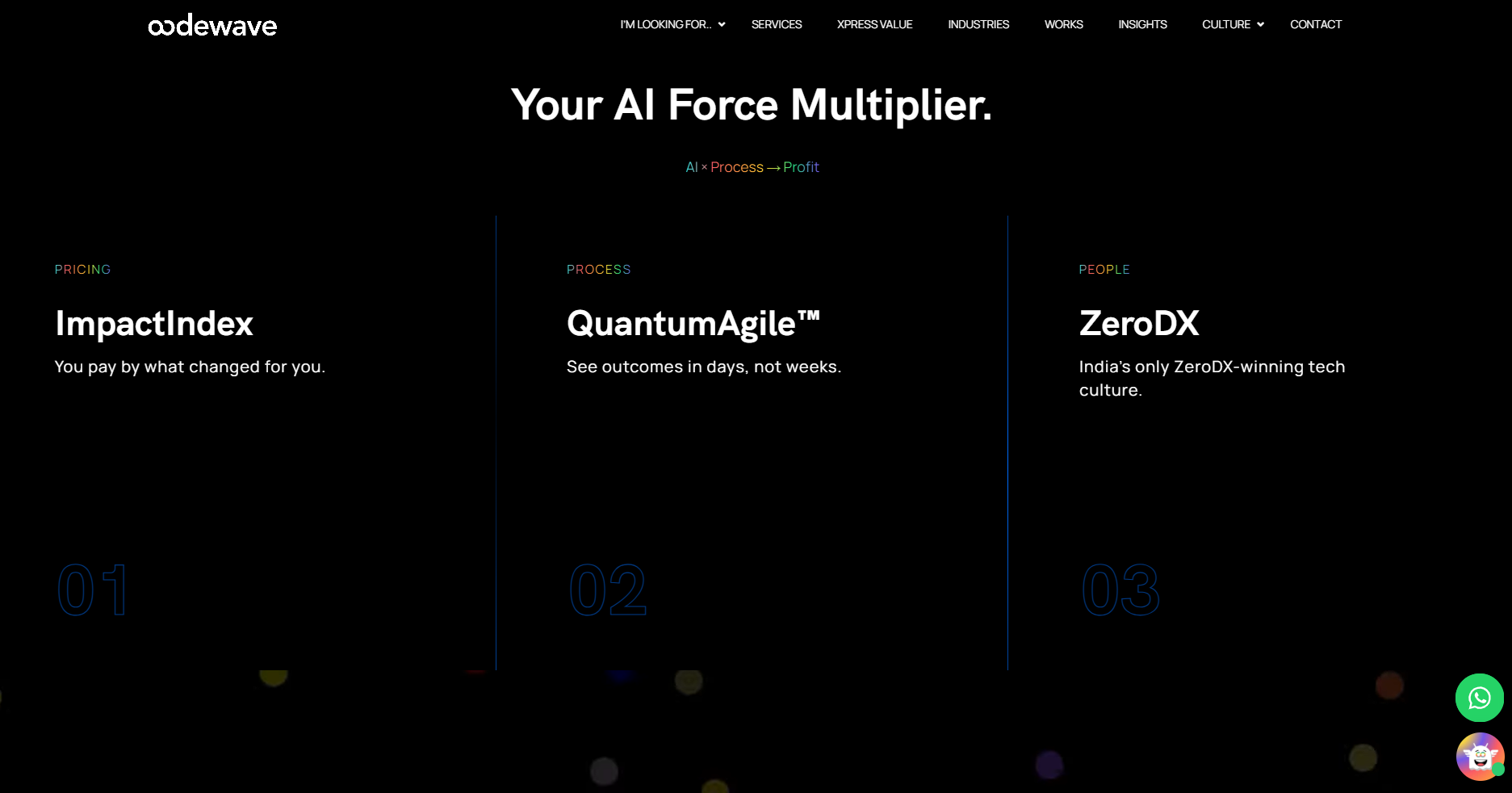
Codewave operates in the AI-as-a-service ecosystem differently from model platforms. Instead of exposing a single hosted model, it builds operational AI systems that run inside business workflows.
Codewave combines AI models, automation logic, and application layers so outputs directly trigger actions across enterprise tools.
It has delivered 400+ digital transformation projects across more than 15 industries and integrates AI with cloud architecture, analytics, and automation to improve efficiency and customer operations.
Codewave AI Services
These services align with enterprises evaluating the top AI-as-a-service providers in 2026, but needing more than just API access.
- Custom AI solution development for enterprise workflows
- Generative AI systems and enterprise copilots
- Predictive analytics and decision intelligence platforms
- Intelligent document processing and automation
- AI audits, prototypes, and production validation programs
- End-to-end AI integration with cloud and legacy systems
Codewave positions AI as an operational layer within the business rather than a feature added to existing software.
Best Suited For
- End-to-end workflow automation rather than isolated predictions.
- Legacy modernization, where existing systems must remain in place.
- Operational decision systems across finance, healthcare, logistics, insurance, and customer operations.
- Enterprises transitioning from pilot stage AI to full production deployment.
Use Cases
Financial Services
- AI-driven credit risk scoring integrated with approval systems
- Fraud detection pipelines that automatically block suspicious transactions
- Automated compliance document validation
Healthcare
- Claims processing automation integrated with hospital systems
- Diagnostic support systems connected to reporting workflows
- Patient engagement bots linked to appointment and billing platforms
Logistics And Mobility
- Route reliability prediction triggering dispatch updates
- Warehouse demand forecasting connected to procurement systems
- Incident detection systems that automatically escalate operational issues
Customer Operations
- AI-powered ticket triage integrated with CRM platforms
- Automated report generation for executive dashboards
- Self-improving support copilots embedded in service tools
Strengths
- Connects AI models with business rules and internal applications
- Embeds AI into processes such as reporting, support, approvals, and operations
- Manages data integration, orchestration, and system-level automation
- Focuses on production deployment rather than experimental features
Limitations
- Requires discovery and architectural planning
- Not suitable for quick standalone feature integration
- Higher initial engagement compared to plug-and-play APIs
2. Amazon Web Services AI
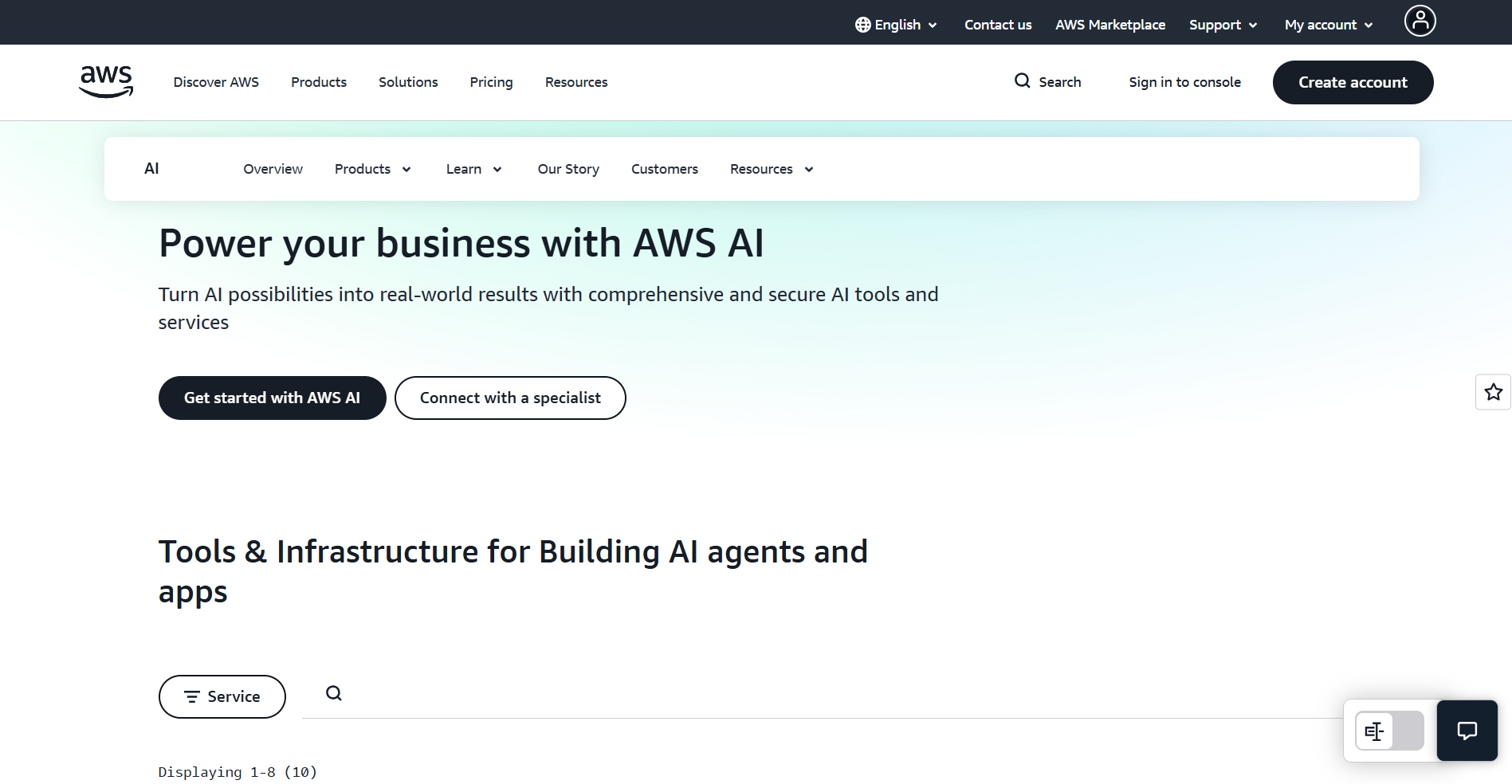
Amazon Web Services AI offers a wide portfolio of managed machine learning and AI services tightly integrated with its cloud infrastructure.
It is typically selected by organizations already running production workloads on AWS that need scalable inference, training, and data processing in the same environment.
Best Suited For
- High volume document, image, or transaction processing
- Cloud native systems are already hosted on AWS
- Enterprises building large-scale AI pipelines
Strengths
AWS integrates AI services directly with storage, compute, and streaming layers, which reduces friction when deploying at scale.
Its mature model lifecycle tooling supports training, deployment, monitoring, and retraining within the same ecosystem, making it suitable for long-running production workloads.
Limitations
The platform assumes familiarity with AWS architecture, which can increase onboarding time for smaller or non-cloud-native teams. Cost structures become complex at scale due to multiple dependent services, which may require careful forecasting to avoid budget surprises.
Typical Enterprise Use Case
Processing millions of documents for classification, running fraud detection pipelines, or managing large image recognition workloads.
When To Shortlist Vs Avoid
Shortlist when scale and infrastructure alignment are primary requirements. Avoid when the goal is rapid feature experimentation without deep cloud integration.
3. Microsoft Azure AI
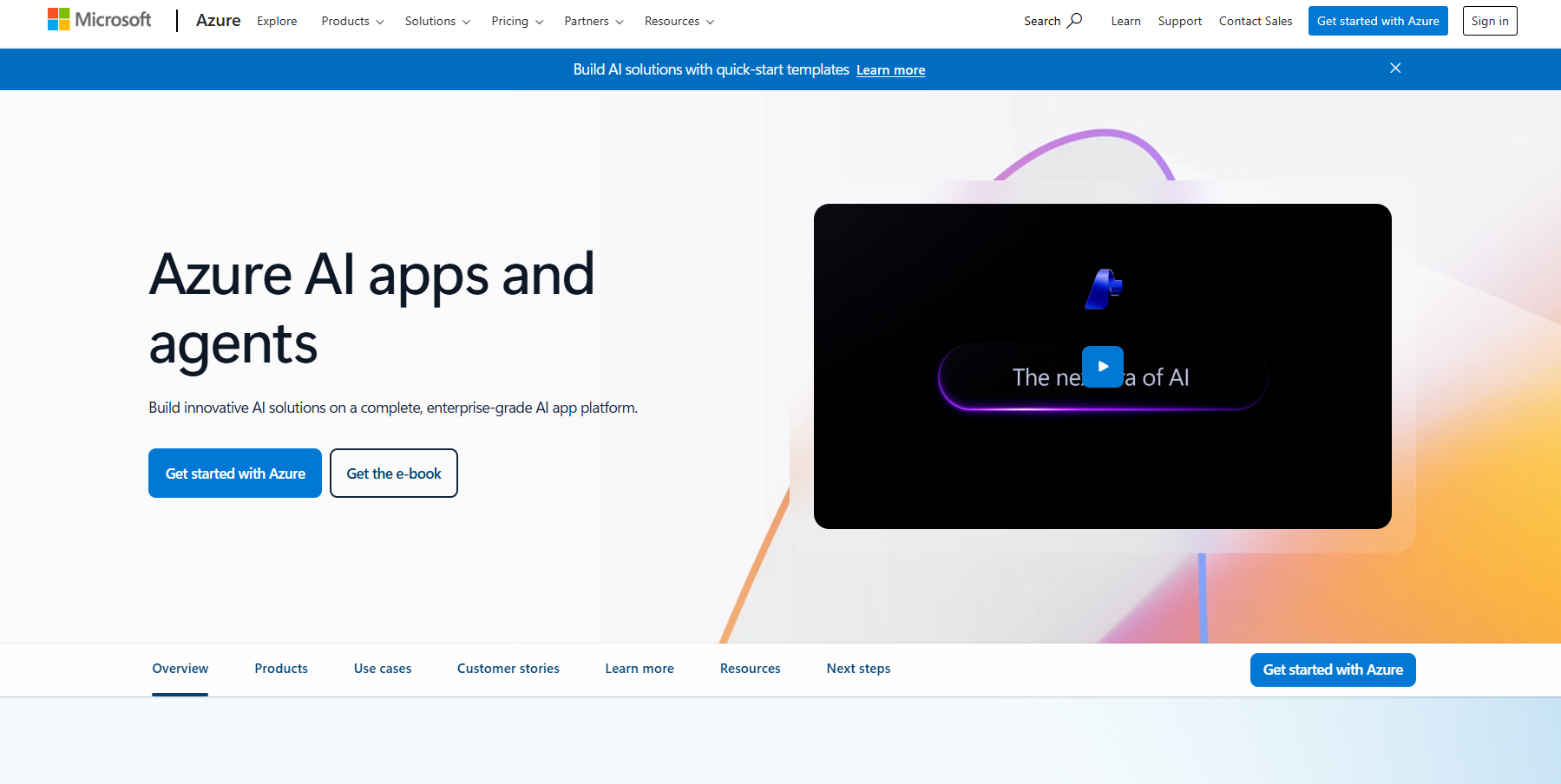
+Microsoft Azure AI focuses on enterprise integration, especially for organizations that already use Microsoft productivity and identity systems. It extends existing workflows rather than encouraging the development of separate AI products.
Best Suited For
- Internal operations automation
- Knowledge management systems
- Enterprise copilots integrated with Microsoft tools
Strengths
Azure connects AI services with Microsoft identity management, compliance tools, and enterprise software, which simplifies governance. It supports secure deployment across regulated organizations that prioritize auditability and access control.
Limitations
Organizations operating across multiple cloud providers may find Azure less flexible outside its ecosystem. Pricing can be layered across services, which requires coordination between IT and finance teams to estimate the total cost of ownership accurately.
Typical Enterprise Use Case
Internal copilots integrated with email, document systems, and enterprise workflows.
When To Shortlist Vs Avoid
Shortlist when Microsoft platforms are already central to operations. Avoid when a cloud agnostic or independent architecture is required.
4. Google Cloud AI
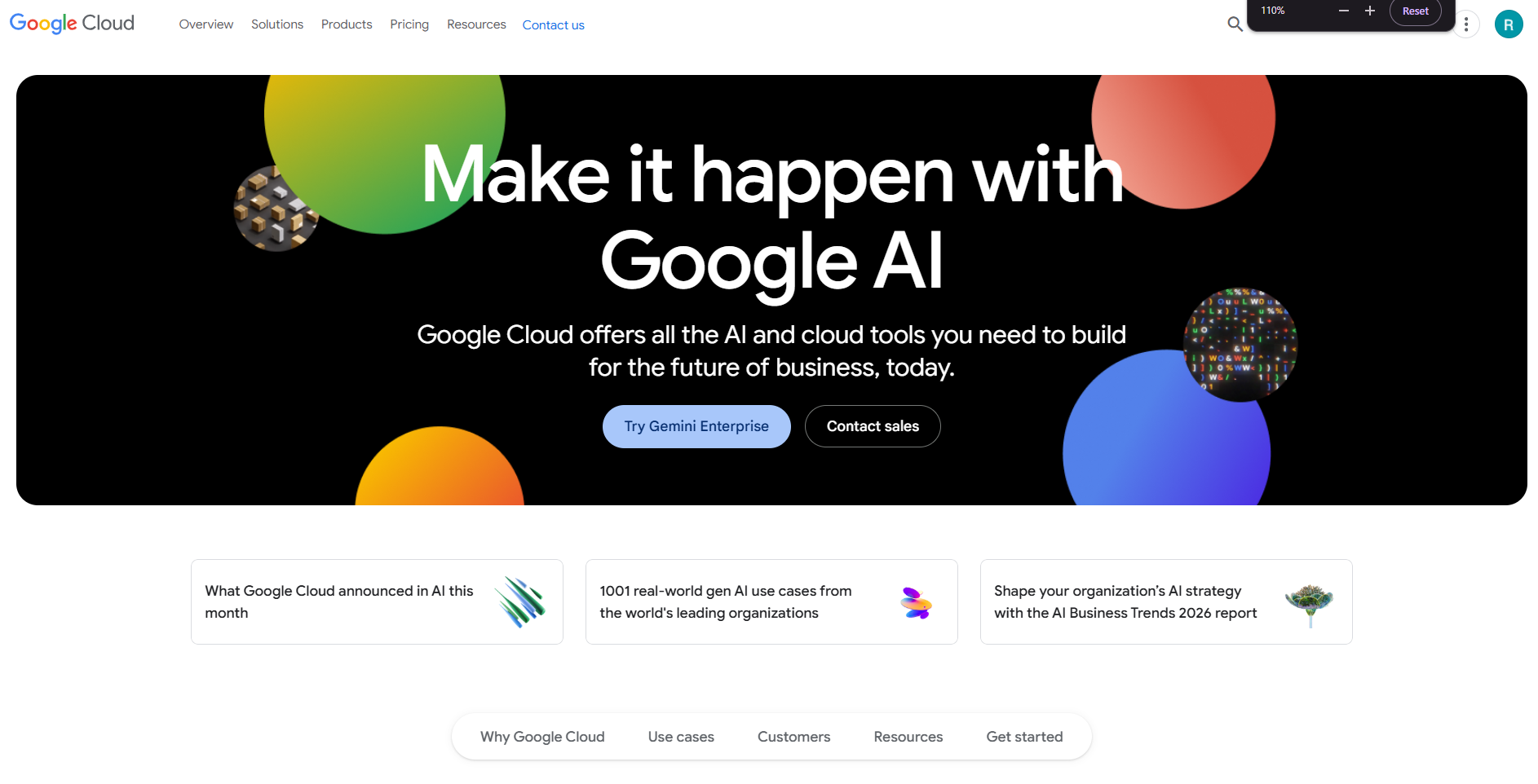
Google Cloud AI is commonly selected by organizations focused on large-scale data processing and advanced analytics. It emphasizes training performance and integration with analytics pipelines.
Best Suited For
- Data-driven products
- Forecasting and recommendation systems
- Enterprises with strong data engineering teams
Strengths
Google Cloud provides integrated tools for data preparation, model training, and analytics, which supports end to end predictive workflows. Its infrastructure is optimized for handling high-volume datasets and training workloads efficiently.
Limitations
Organizations without structured data pipelines may face longer implementation timelines. The platform assumes technical maturity in data engineering, which can affect speed to deployment if internal capabilities are limited.
Typical Enterprise Use Case
Demand forecasting, recommendation engines, and behavioral analytics platforms.
When To Shortlist Vs Avoid
Shortlist for analytics-intensive applications. Avoid when the primary need is workflow automation rather than data modeling.
5. IBM Watson
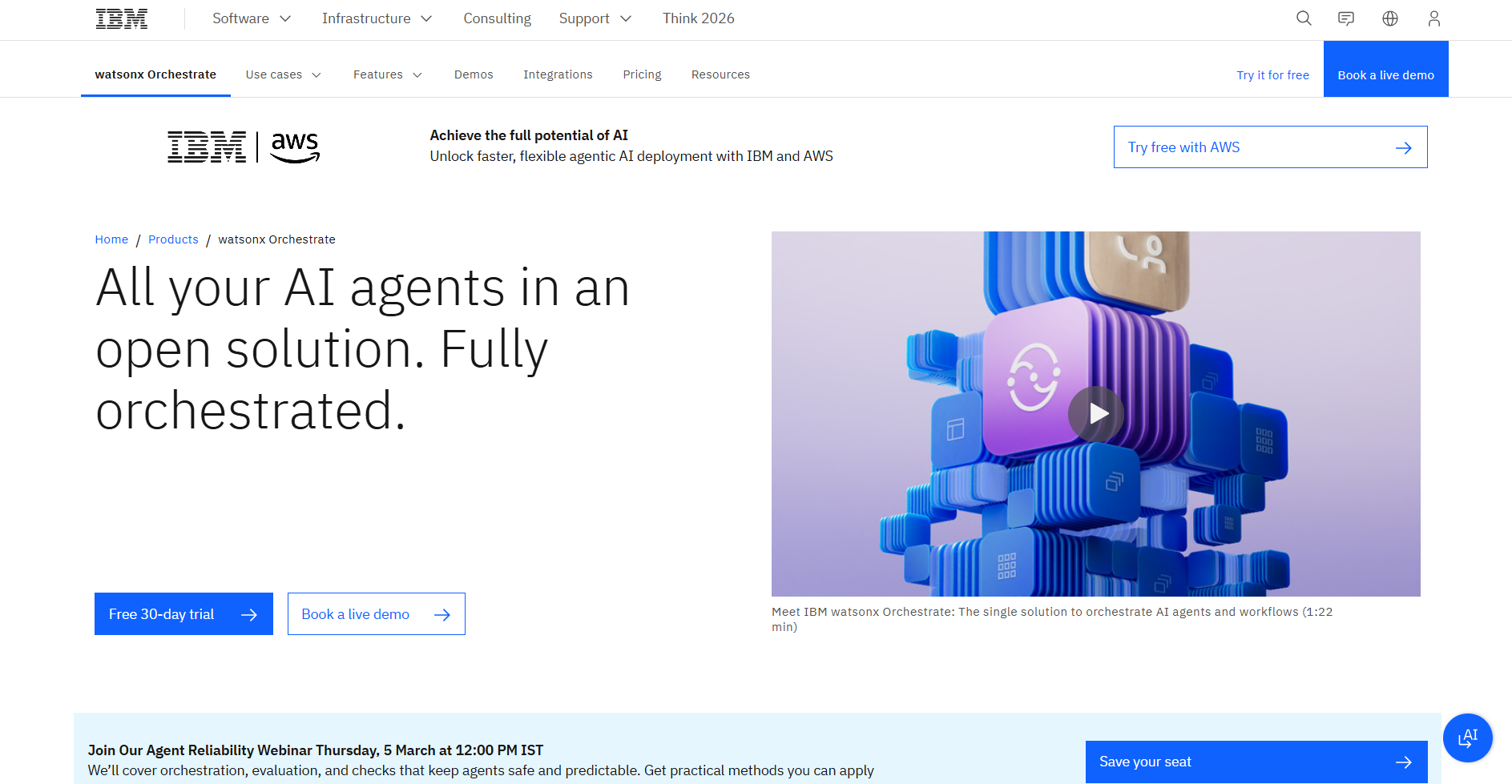
IBM Watson is positioned for industries that require traceability, explainability, and compliance. It is frequently used in healthcare, financial services, and government environments.
Best Suited For
- Regulated decision support systems
- Healthcare and financial risk analysis
- Compliance-focused workflows
Strengths
Watson emphasizes explainable AI and governance controls, which help organizations meet audit requirements. It provides industry-oriented modules designed around regulated processes rather than consumer product features.
Limitations
The focus on governance can slow experimentation cycles compared to lighter platforms. It may not be ideal for rapid product feature development where iteration speed is critical.
Typical Enterprise Use Case
Policy review automation, risk scoring systems, and compliance analysis.
When To Shortlist Vs Avoid
Shortlist when regulatory requirements are strict. Avoid for consumer facing product experimentation that demands quick iteration.
6. OpenAI Platform
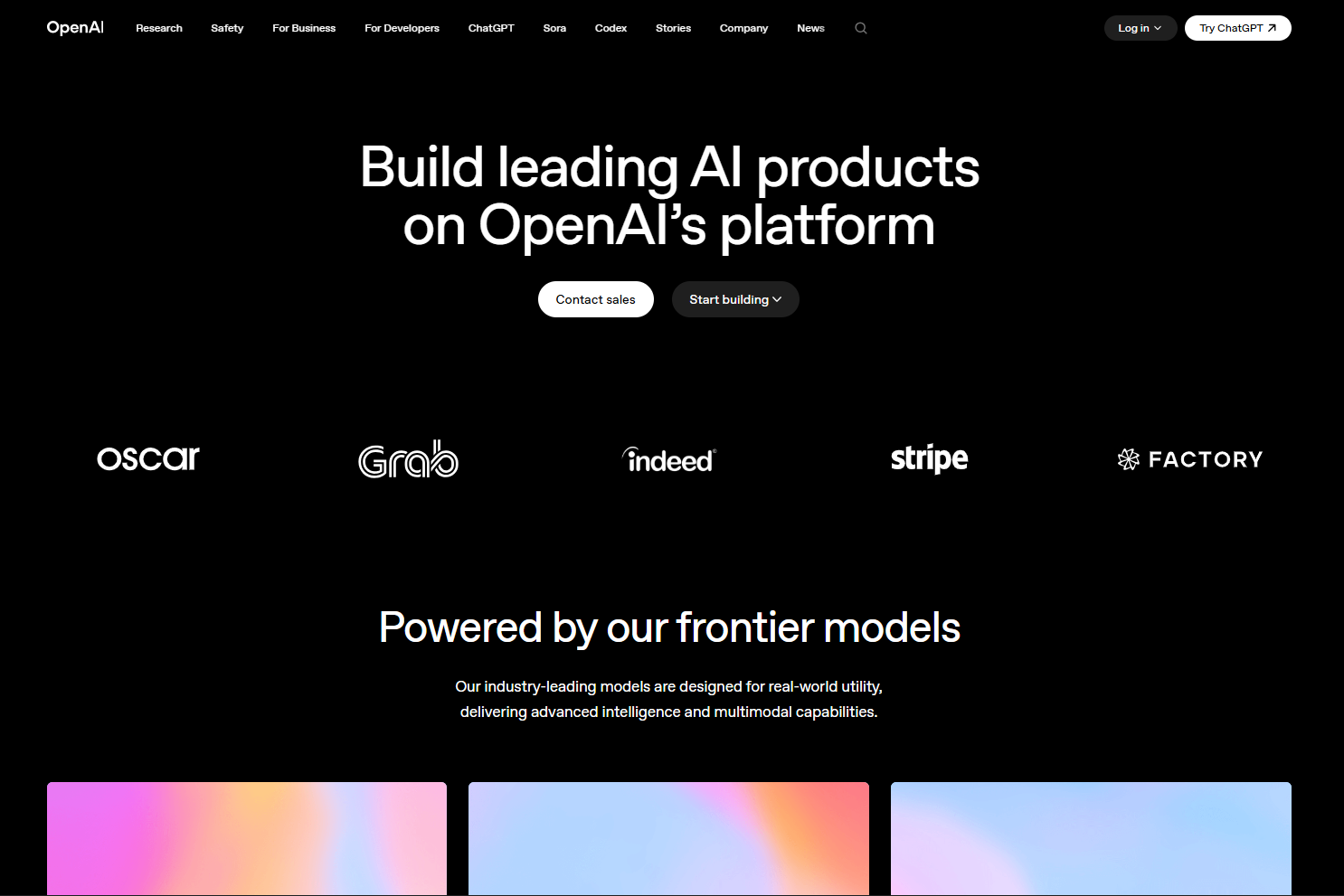
OpenAI provides general-purpose language and reasoning capabilities through APIs. It is often integrated into digital products to enable conversational features and intelligent content handling.
Best Suited For
- Conversational assistants
- Knowledge retrieval systems
- Product-level reasoning features
Strengths
The API-based model allows for fast integration into web and mobile products. It supports a broad range of language tasks, including summarization, reasoning, and structured output generation.
Limitations
Complex workflows require additional orchestration layers outside the platform. Usage-based pricing can vary with scale, requiring careful monitoring in high-volume environments.
Typical Enterprise Use Case
Customer support automation embedded into SaaS products.
When To Shortlist Vs Avoid
Shortlist for embedding language intelligence into applications. Avoid when a full operational automation system is required without additional engineering.
7. Anthropic Claude API
Anthropic focuses on controlled and structured language outputs. It is often selected where consistency and predictable responses are important.
Best Suited For
- Long-form document analysis
- Internal knowledge systems
- Policy and compliance assistance
Strengths
Claude is designed to generate structured responses with lower variance, supporting enterprise documentation workflows. It can handle extended context, making it useful for reviewing long documents.
Limitations
The ecosystem around tooling and integrations is smaller than that of larger cloud providers. It is primarily language-focused and may require additional platforms for multimodal or infrastructure needs.
Typical Enterprise Use Case
Contract review and internal policy analysis automation.
When To Shortlist Vs Avoid
Shortlist when structured document reasoning is central. Avoid when the use case depends heavily on image, video, or multimodal processing.
8. Databricks AI
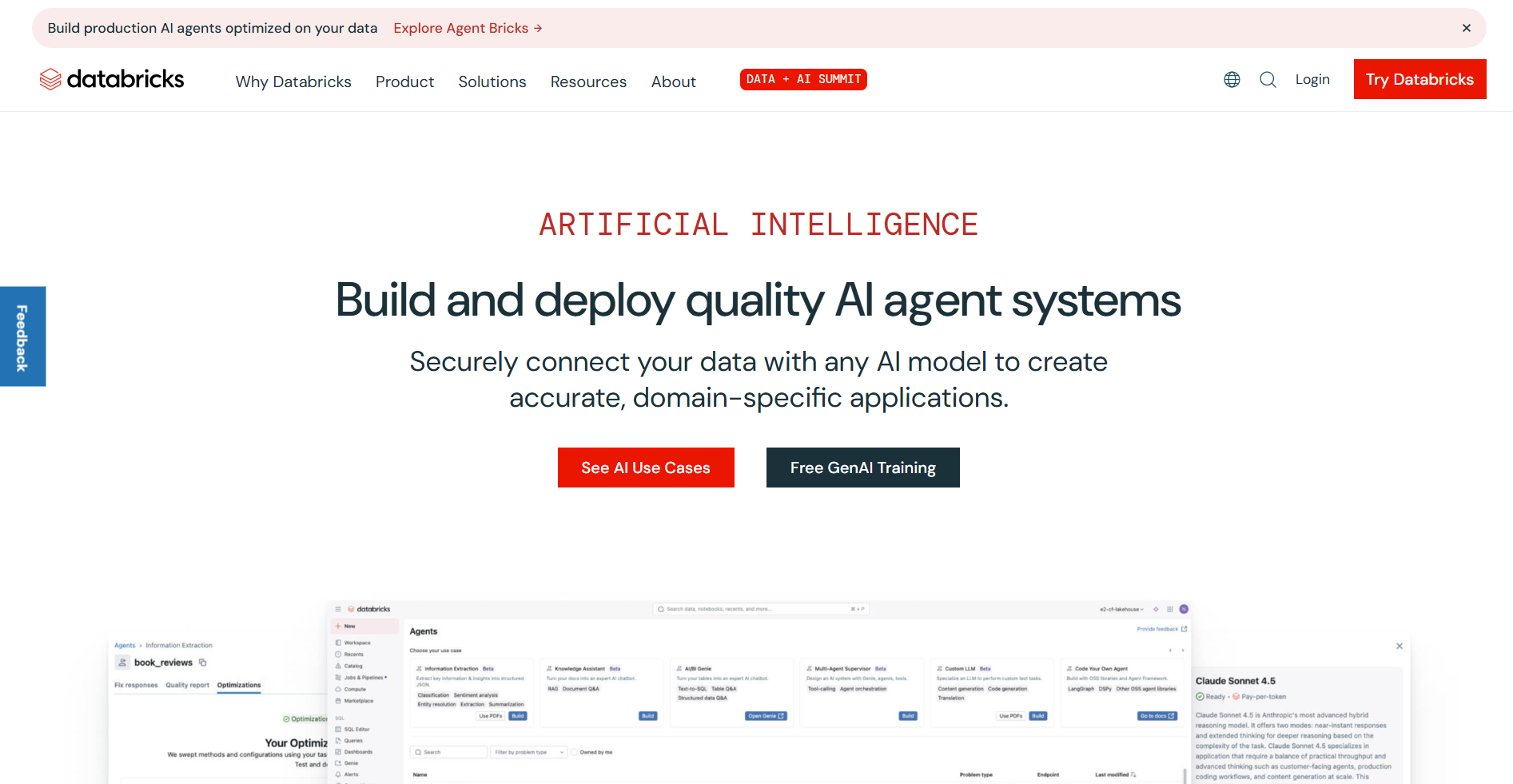
Databricks combines data engineering, analytics, and model development in one environment. It is suited for organizations that want to build and own proprietary models.
Best Suited For
- Enterprises with established data platforms
- Custom model training and experimentation
- Internal AI ownership strategies
Strengths
It unifies data preparation and model development, reducing the need to move between tools. Organizations retain full control over training and deployment processes, which supports proprietary model strategies.
Limitations
Implementation requires strong data engineering expertise. Time to value may be longer than on API-driven platforms, especially if internal teams are small.
Typical Enterprise Use Case
Building predictive models on large operational datasets.
When To Shortlist Vs Avoid
Shortlist when long-term model ownership is strategic. Avoid when only a ready-made AI feature is required.
9. Snowflake Cortex AI
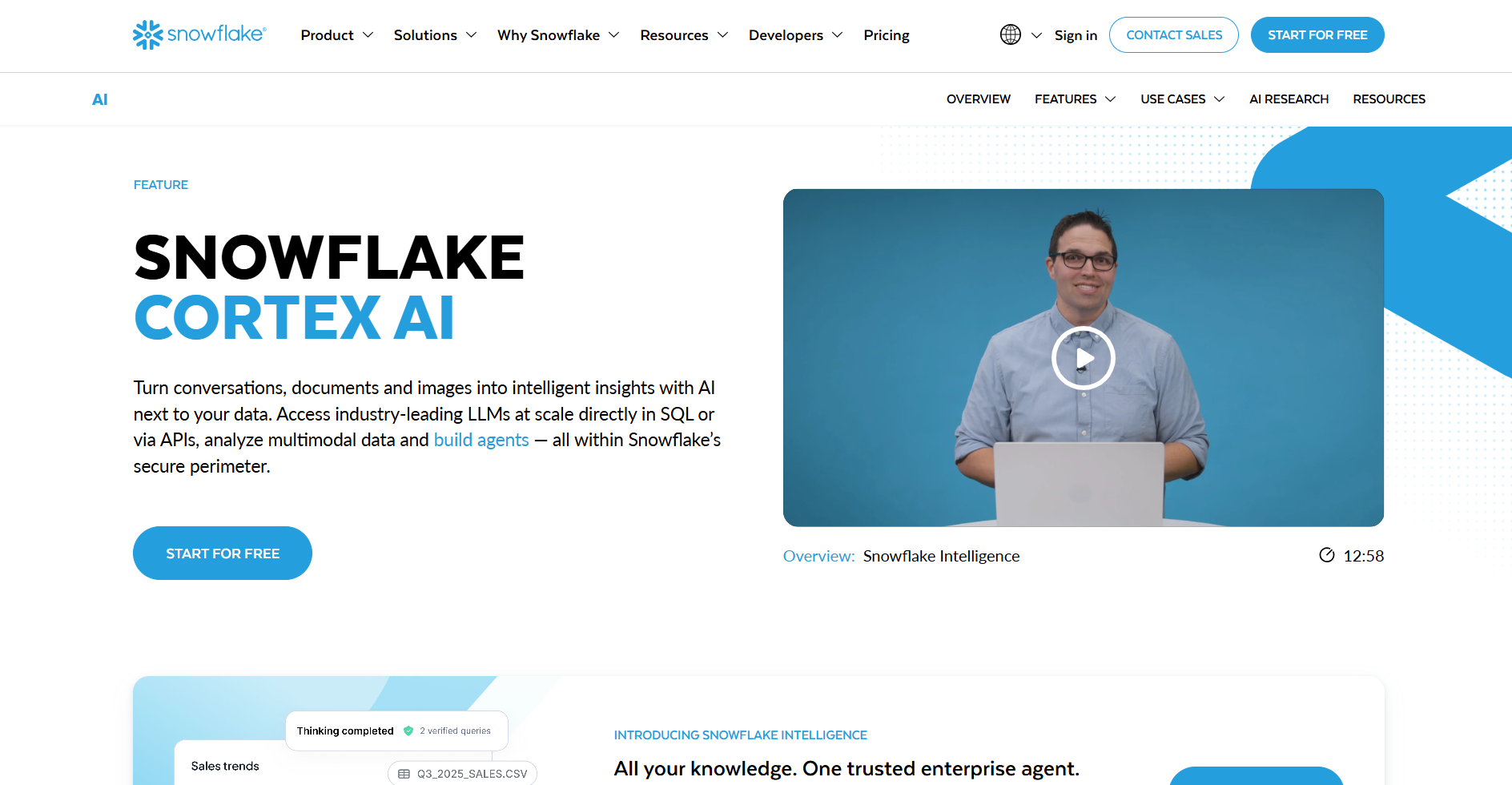
Snowflake Cortex AI embeds AI capabilities directly within data warehouse environments. It enables analytics teams to apply intelligence without exporting data to separate ML systems.
Best Suited For
- SQL-driven analytics teams
- Data warehouse-centric organizations
- Text analysis within reporting workflows
Strengths
It keeps AI close to enterprise data, reducing movement and simplifying governance. Analytics teams can apply AI functions within familiar SQL environments.
Limitations
The platform is tightly coupled with the Snowflake ecosystem. It is less suited for application-level feature development outside analytics contexts.
Typical Enterprise Use Case
Automated text summarization and classification within reporting pipelines.
When To Shortlist Vs Avoid
Shortlist when analytics augmentation is the goal. Avoid when building customer-facing AI features.
10. Hugging Face Inference Services
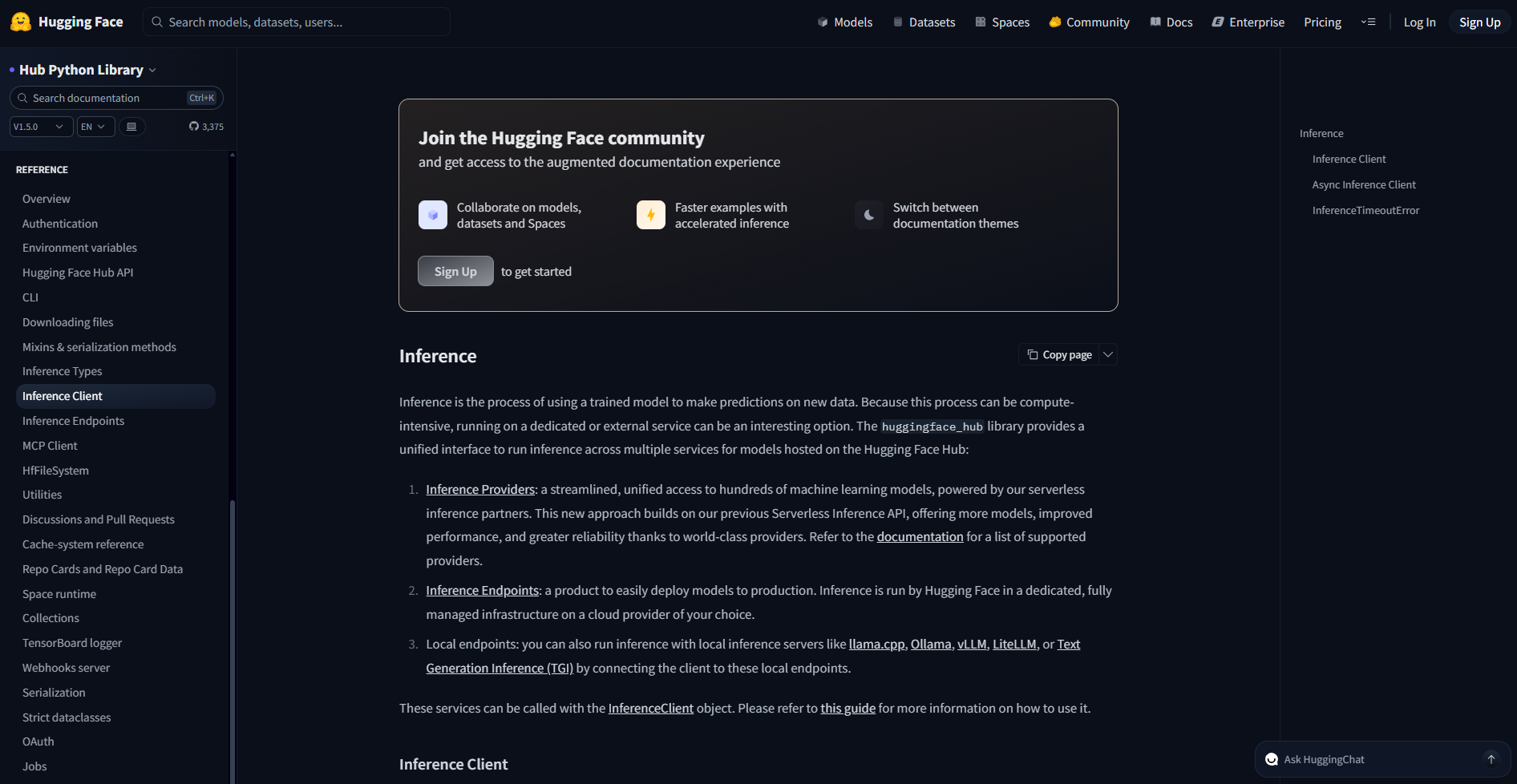
Hugging Face provides access to a wide catalog of open models with managed hosting. It supports experimentation and model customization.
Best Suited For
- Research and experimentation
- Deploying open source models
- Custom model hosting strategies
Strengths
It offers flexibility across model architectures and frameworks. Teams can select from a broad ecosystem rather than relying on a single proprietary model.
Limitations
Operational responsibility for scaling and reliability often remains partly with the user. It may require additional engineering to meet strict enterprise uptime expectations.
Typical Enterprise Use Case
Prototyping new AI capabilities before committing to a production platform.
When To Shortlist Vs Avoid
Shortlist when flexibility and experimentation are priorities. Avoid when a fully managed, production-grade reliability model is required without additional engineering support.
Make your AI decisions reliable, not guesswork. Codewave builds data-driven systems that improve accessibility by 60%, process data 3x faster, and cut operational costs by 25%. Use your internal data to power automation and decisions that actually execute across your operations.
Also Read: How AI/ML Can Solve Your Project Management Bottlenecks
Why Some Companies Need Custom Implementation Instead Of Platform Subscription
AI platforms can generate answers, summaries, or predictions. But businesses run on actions, approvals, and system updates. The moment AI has to operate inside daily workflows, a simple API call is no longer enough. Most stalled deployments fail at this step, where output needs to become execution.
- Enterprise tools must talk to each other. AI responses often need to update CRM records, trigger ERP changes, or start downstream tasks
- Regulated teams need traceability. Decisions must be logged, reviewed, and sometimes overridden by humans
- Real operations include edge cases. Exceptions, escalations, and validation steps must exist around the model
- Costs and performance must stay predictable under live usage
This is why many companies pair model platforms with custom implementation. The model provides intelligence. The implementation makes it part of everyday operations.
Which AIaaS Provider Matches Your Use Case?
Companies do not adopt AI in the same way. A support team wants faster responses, a finance team wants risk prediction, and an operations team wants fewer manual steps. The objective determines which kind of provider fits.
So the decision should start with the business problem, not the vendor name. Once the use case is clear, the right AI provider category becomes easier to identify.
| Use Case | Recommended Provider Type |
| Conversational interfaces and product copilots | Foundation model platforms such as OpenAI or Anthropic |
| Customer support automation at enterprise scale | Cloud AI platforms such as Azure AI or AWS AI |
| Predictive analytics on company datasets | Data platform AI, such as Databricks or Google Cloud AI |
| Analytics directly inside warehouse queries | Embedded warehouse AI, such as Snowflake Cortex |
| Document extraction and classification | Managed AI services such as AWS or Google document AI tools |
| Compliance-heavy decision workflows | Governance- focused platforms such as IBM Watson |
| Cross-system operational automation | Custom AI implementation providers |
| Proprietary model experimentation | Open model hosting platforms such as Hugging Face |
| Full operational ownership and integration | Custom-engineered AI solutions instead of an API subscription |
Codewave: When AI Needs To Run The Business, Not Just Answer Questions
Most AI platforms give you an answer. Businesses still have to decide what happens next. Codewave focuses on that missing step by turning model output into completed actions inside everyday operations.
Instead of plugging a model into a single feature, it builds systems in which data, decisions, approvals, and updates flow across existing software. The result is an AI that actually runs a process rather than just assisting one.
Key Services
- Custom AI solution development aligned to specific business workflows
- Predictive analytics integrated with operational systems
- Intelligent document and decision processing automation
- AI-powered customer and internal copilots
- Process automation across ERP, CRM, and internal platforms
- AI audits prototypes and proof of concept validation
- Performance monitoring and continuous model improvement
Explore Codewave’s portfolio to see how these systems operate across industries and workflows. Each case shows how AI decisions translate into measurable operational outcomes.
Conclusion
AI as a service is no longer about accessing smarter models. It is about choosing how intelligence fits into operations. Some providers help you add features faster. Others help you analyze data better. A few help you automate decisions across systems. The right choice depends on whether you want assistance, prediction, or execution. Many projects fail after a successful demo because the output never becomes part of daily workflows.
If your goal is to move from insights to completed actions, talk to Codewave and explore how AI can operate inside your business processes, not beside them.
FAQs
Q: How long does an enterprise AI deployment typically take after vendor selection?
A: A feature integration can launch in weeks, but operational automation often takes several months. The time is spent mapping decisions to approvals, data flows, and exception handling. Most delays occur after the model already works.
Q: Can companies switch AI providers easily after implementation?
A: Switching is easy when AI is a standalone feature. It becomes complex when embedded into workflows and internal systems. The deeper the operational dependency, the higher the migration effort.
Q: Do AIaaS providers replace internal data teams?
A: No. Internal teams still define policies, review outputs, and maintain data quality. Providers manage model behavior and infrastructure, while the organization owns decision logic.
Q: Is it better to standardize on one provider across departments?
A: Not always. Many organizations use one provider for conversational features and another for analytics or automation. Matching provider type to use case usually works better than uniform adoption.
Q: What causes AI projects to work in demos but fail after rollout?
A: Real environments introduce incomplete data, approvals, and operational exceptions. If processes are not redesigned around AI outputs, teams fall back to manual steps.

Pruthviraj Karur S is a Software Engineer at Codewave who specialises in building robust digital solutions across web, mobile, and cloud platforms. His writing covers software engineering best practices, technology architecture, and digital transformation—drawn from real-world experience delivering custom applications for global clients.