


Introduction: Why Animations Matter
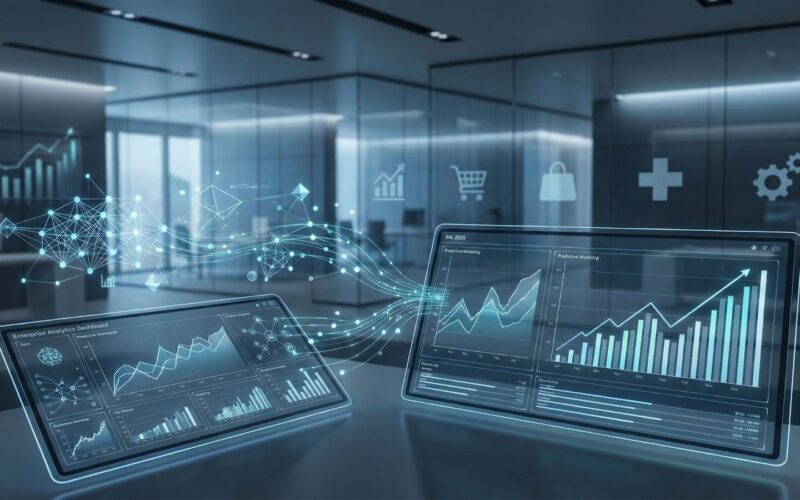
The animations aren’t just decorative they’re essential to how users experience the web. From seamless transitions to immersive scroll effects, motion design guides attention, enhances usability, and makes digital spaces feel alive.
Two tools lead this new era: Webflow, the no-code platform with powerful built-in interactions, and Framer Motion, the React-based library for advanced animations. Together, they showcase the future of motion design accessible for designers, limitless for developers.
This focus on interactivity and performance aligns closely with Codewave’s approach to Web App Development creating experiences that balance creativity, function, and speed.
Micro-Interactions as Everyday Essentials
Micro-interactions are the small moments that elevate digital experiences hover effects, button clicks, and subtle loading indicators that make interfaces feel human.
Webflow’s Role: Visual designers can create hover animations, fade-ins, and feedback states without touching code.
Framer Motion’s Role: Developers extend this further with gestures, draggable elements, and dynamic transitions using variants and animatePresence.
The micro-interactions are not embellishments they’re functional cues that enhance user confidence.
Scroll-Triggered Animations Dominate Storytelling
Scrolling has become a storytelling tool. Motion tied to scroll progress turns websites into cinematic experiences.
With Webflow: Designers link animations to scroll depth think sliding text, layered reveals, and background shifts.
With Framer Motion: Developers build synced parallax, timeline-based motion, and complex reveal sequences.
The result is digital storytelling a fusion of design and development, much like our process in Digital Transformation projects, where narrative and technology move together.
3D, Depth, and Parallax Become Mainstream
Once limited to advanced coders, 3D motion and parallax depth are now standard tools for both designers and developers.
Webflow Innovations: Native Lottie animation support, 3D model imports, and parallax layering.
Framer Motion Power: When paired with React Three Fiber, it enables realistic camera transitions, physics-driven movement, and immersive 3D storytelling.
Subtle depth, not spectacle, defines the trend immersive yet performant, just as we emphasize in Custom App Development that merges aesthetic and technical precision.
Performance-Driven Animation Design
Users expect smooth, glitch-free motion, even on mobile.
Webflow Approach: Uses optimized transforms and opacity to ensure buttery-smooth transitions.
Framer Motion Edge: Harnesses hardware acceleration and declarative animations for zero-lag performance.
Great animation design is no longer judged by looks alone but by responsiveness the same ethos we follow in UX Design Services, where beauty meets usability.
Adaptive Animations Across Devices
Motion must adapt to context. The same animation shouldn’t behave identically on desktop and mobile.
- Webflow Flexibility: Enables per-breakpoint animation control complex scroll effects on desktop can simplify to fades on mobile.
- Framer Motion Control: Variants allow developers to create responsive gestures and motion states across devices.
The future of motion is adaptive responsive not just to screens, but to human attention.
Emotion and Storytelling Through Motion
Animation is emotional. It shapes mood, tone, and personality.
- Webflow Direction: Calm transitions and layered fades that reflect brand character.
- Framer Motion Creativity: Component-based sequences that connect interactions and feelings.
Motion becomes a storytelling medium one that can transform UX into emotional experience.
Generative and AI-Aided Motion
AI is starting to shape motion design.
- Webflow Potential: Designers can prototype and generate motion paths with AI prompts.
- Framer Motion Exploration: Developers experiment with data-driven, AI-reactive states for personalized motion.
It’s the dawn of adaptive, intelligent motion experiences that evolve in real time.
Conclusion: Animations as the Core of Web Design
The animations aren’t extras they are the framework of digital storytelling. Webflow empowers creators to build motion visually; Framer Motion gives developers infinite creative control.
The future is motion that’s lightweight, adaptive, emotional, and meaningful. It’s how we craft immersive digital journeys that users feel, not just see.
Designation: Web Developer
Bio: Web developer specialized in WordPress and no-code/low-code platforms, leveraging AI to build efficient digital solutions that deliver real impact.