




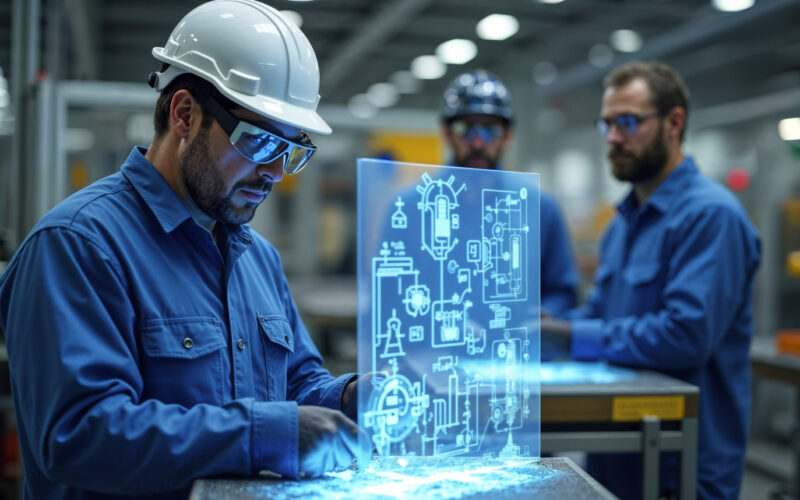
In manufacturing, progress doesn’t come from standing still. It comes from embracing new opportunities. Industrial AI offers a clear path forward.
By 2030, the global market for AI in manufacturing is set to hit $155.04 billion, growing rapidly from $34.18 billion in 2025. In 2024 alone, 35% of manufacturing firms incorporated AI, particularly for predictive maintenance and quality control.
What makes this technology accessible is its flexibility. Manufacturers can start with focused applications that address specific operational challenges. The goal is to augment human expertise with data-driven intelligence. Success comes from thoughtful implementation that fits existing processes.
This article will break down the growing role of Industrial AI and what it means for the industry.
Key Takeaways
- Industrial AI relies on eight core technologies: machine learning, computer vision, predictive analytics, IoT sensors, edge computing, deep learning, natural language processing, and robotics.
- AI delivers value through predictive maintenance, quality assurance, supply chain optimization, energy management, production planning, worker safety, inventory control, and process optimization.
- Industries leading AI adoption include automotive, pharmaceuticals, electronics, food and beverage, aerospace, energy, chemical processing, textiles, and metal fabrication.
- Successful implementation requires clear objectives, quality data, gradual scaling, skilled talent, system integration, and a culture that embraces innovation.
What Is Industrial AI?
Industrial AI refers to artificial intelligence applications designed specifically for manufacturing and production environments. These systems use machine learning, computer vision, and data analytics to optimize operations.
They predict equipment maintenance needs, monitor quality control, and improve production efficiency. Industrial AI processes data from sensors, machines, and production lines continuously.
The technology provides actionable insights that help manufacturers make informed decisions. It helps reduce waste and maintain consistent output quality across operations.
Common Technologies Used in Industrial AI
Industrial AI relies on several core technologies working together to process information and support decision-making. Each technology serves a specific purpose in creating intelligent manufacturing systems.
- Machine Learning: Algorithms that learn from historical data to identify patterns, predict outcomes, and improve accuracy over time without explicit programming.
- Computer Vision: Systems that analyze visual information from cameras and sensors to inspect products, detect defects, and monitor production processes in real time.
- Natural Language Processing: Technology that enables machines to understand and respond to human language, facilitating easier interaction between operators and AI systems.
- Predictive Analytics: Tools that use statistical models and data patterns to forecast equipment failures, maintenance needs, and production bottlenecks before they occur.
- Edge Computing: Processing power located directly on the factory floor that analyzes data locally, reducing latency and enabling faster response times for critical operations.
- Internet of Things (IoT): Connected sensors and devices that collect real-time data from equipment, tracking performance metrics, temperature, vibration, and other operational parameters.
- Deep Learning: Advanced neural networks that process complex data sets to recognize intricate patterns, particularly useful for quality control and anomaly detection tasks.
- Robotics and Automation: Intelligent machines that perform repetitive tasks with precision, adapting to changes in production requirements through AI-guided programming and learning.
Various Applications of Industrial AI
Industrial AI finds practical use across multiple manufacturing functions, addressing specific operational challenges. These applications deliver measurable improvements in how facilities produce and manage their output.
- Predictive Maintenance: AI monitors equipment health through sensor data, forecasting when components will need servicing to prevent unplanned shutdowns and extend machinery lifespan.
- Quality Assurance: Automated inspection systems examine products at high speeds, identifying defects invisible to human eyes and ensuring consistent standards across production batches.
- Supply Chain Optimization: Intelligence platforms analyze demand patterns, inventory levels, and logistics data to streamline procurement, reduce carrying costs, and improve delivery timing.
- Energy Management: Smart systems track power consumption across facilities, identifying inefficiencies and automatically adjusting usage to lower costs while maintaining production requirements.
- Production Planning: AI algorithms optimize scheduling by considering machine availability, workforce capacity, and order priorities to maximize throughput and minimize idle time.
- Worker Safety: Monitoring systems detect hazardous conditions, track compliance with safety protocols, and alert personnel to potential risks before incidents occur on the floor.
- Inventory Control: Intelligent tracking monitors raw materials and finished goods, automating reorder points and preventing both stockouts and excess inventory that ties up capital.
- Process Optimization: Analytics identify bottlenecks and inefficiencies in production workflows, recommending adjustments that improve cycle times and reduce material waste throughout operations.
Industrial AI is reshaping how manufacturers operate, and having the right technology partner makes implementation smoother.
Codewave brings specialized expertise in RPA, IoT, and AI/ML consulting services built specifically for heavy industries. We work alongside manufacturing teams to design systems that fit existing operations and deliver tangible results.
Ready to take your operations to the next level? Let’s make it happen together.
Industries Benefitting the Most From Industrial AI
Different sectors are adopting industrial AI at varying rates based on their specific operational needs and challenges. These industries are seeing particularly strong returns from AI implementation.
- Automotive Manufacturing: AI guides robotic assembly, inspects welds and paint finishes, and coordinates complex supply chains involving thousands of components from global suppliers.
- Pharmaceuticals: Precision monitoring ensures drug production meets strict regulatory standards, while AI tracks environmental conditions and validates batch consistency throughout manufacturing processes.
- Electronics: High-speed vision systems inspect circuit boards and microcomponents at scales impossible for human detection, catching microscopic defects that could cause product failures.
- Food and Beverage: Smart sensors monitor hygiene, temperature, and freshness throughout production, ensuring safety compliance while optimizing shelf life and minimizing spoilage across batches.
- Aerospace: AI verifies the integrity of critical components where failure isn’t acceptable, analyzing materials and assembly with extreme precision demanded by aviation safety standards.
- Energy: Intelligent systems optimize power generation, predict equipment degradation in refineries and plants, and balance grid loads to improve efficiency while reducing operational costs.
- Chemical Processing: AI controls complex reactions, adjusts parameters in real time, and predicts equipment corrosion to maintain safe operations in hazardous environments.
- Textiles and Apparel: Automated quality checks identify fabric flaws, optimize cutting patterns to reduce waste, and coordinate production schedules across multiple facilities and product lines.
- Metal Fabrication: AI monitors cutting tools for wear, adjusts machining parameters for different materials, and inspects welds to ensure structural integrity in finished components.
Advantages of Industrial AI in Manufacturing Operations
Implementing AI technologies brings concrete benefits that extend across financial, operational, and competitive dimensions. These advantages help manufacturers operate more effectively in demanding markets.
- Cost Reduction: Automated processes and predictive systems lower labor expenses, decrease material waste, and minimize energy consumption while maintaining or improving output levels.
- Enhanced Productivity: AI-driven optimization increases throughput by reducing downtime, accelerating production cycles, and enabling equipment to operate closer to peak capacity more consistently.
- Improved Product Quality: Continuous monitoring and instant defect detection ensure higher standards, reducing returns, warranty claims, and reputation damage from inconsistent output.
- Better Resource Allocation: Data-driven insights help managers deploy personnel, materials, and equipment more effectively, ensuring resources go where they create the most value.
- Faster Decision-Making: Real-time analytics provide immediate visibility into operations, allowing teams to respond quickly to issues rather than discovering problems after they escalate.
- Competitive Differentiation: Advanced capabilities enable manufacturers to offer shorter lead times, greater customization, and higher reliability than competitors using traditional methods alone.
- Risk Mitigation: Early warning systems identify potential failures, safety hazards, and quality issues before they result in costly accidents, recalls, or production halts.
- Scalability: AI systems adapt as operations grow, handling increased data volumes and complexity without proportional increases in administrative overhead or management burden.
Limitations of Industrial AI
While Industrial AI offers transformative benefits, it’s not without challenges. Here are some key limitations to consider:
- High Initial Costs: The implementation of AI-driven systems requires significant investment in hardware, software, and skilled personnel. Small and medium-sized manufacturers, in particular, may struggle with the upfront costs of integrating AI technologies.
- Data Quality and Availability: AI models rely heavily on data. Inconsistent, incomplete, or poor-quality data can compromise the accuracy of predictions and insights. Manufacturers must invest in robust data collection and management systems for AI to be effective.
- Integration with Legacy Systems: Many manufacturing plants still rely on outdated equipment and software. Integrating AI solutions with these legacy systems can be complex, costly, and time-consuming, often requiring extensive customization.
- Skill Shortages: There is a shortage of qualified professionals with the expertise to implement, manage, and optimize AI systems in industrial settings. Without the right talent, organizations may struggle to realize the full potential of AI.
- Security Risks: As AI systems become more integrated with operational technology, they can become targets for cyberattacks. Ensuring robust cybersecurity measures are in place is essential to protect sensitive data and critical infrastructure.
- Limited Flexibility: While AI excels at automating repetitive tasks, it may struggle with more nuanced, creative decision-making that requires human intervention. AI can optimize existing processes, but may not be as adept at handling unexpected challenges or complex problem-solving.
- Regulatory and Ethical Concerns: The use of AI in industrial settings raises questions around ethics and compliance, especially regarding data privacy, transparency in decision-making, and accountability in the event of system failures or errors.
Despite these limitations, the potential of Industrial AI remains vast. Overcoming these challenges often requires a combination of technological investment, talent development, and a clear strategy to ensure a smooth and effective AI integration.
How to Successfully Implement Industrial AI
Implementing Industrial AI requires a well-thought-out strategy that aligns with your business goals and operational needs.
Successful integration not only involves choosing the right technology but also preparing your organization for the change. Here’s a guide to ensuring a smooth and effective AI adoption process:
Define Clear Objectives
Start by identifying the specific problems you aim to solve with AI, such as reducing downtime, optimizing production, or enhancing quality control. Clear goals will drive focused efforts and ensure that AI is deployed where it can add the most value.
Invest in Quality Data
AI thrives on data, so ensuring high-quality, accurate, and consistent data is crucial. Implement systems for real-time data collection, cleaning, and management. This forms the foundation for AI models to generate actionable insights.
Start Small, Scale Gradually
Implement AI solutions in one area of the business before scaling. This allows for a more manageable transition, easier troubleshooting, and the ability to prove ROI before committing to broader deployment.
Engage the Right Talent
Hiring or upskilling employees with expertise in AI, machine learning, and data science is essential for successful deployment. Partnering with trusted AI consultants or solution providers can also help bridge skill gaps.
Codewave’s AI and ML consulting team works directly with your existing workforce, providing hands-on training and knowledge transfer throughout implementation.
We assess your current capabilities, identify specific skill gaps, and develop custom upskilling programs that build internal expertise rather than creating dependency.
Connect with us today to build AI capabilities in-house.
Ensure System Integration
AI solutions must seamlessly integrate with existing manufacturing systems. Invest in tools and platforms that allow AI to work with your current technology stack, ensuring smooth operation across departments.
Foster a Culture of Change
Adopting AI requires a shift in mindset. Encourage a culture of innovation, where employees are open to change and new ways of working. Provide training and support to ensure the workforce adapts successfully.
Conclusion
Industrial AI represents a practical evolution in how manufacturing operates, not a distant future concept. The technology exists today, accessible to operations of various sizes and ready to deliver measurable improvements.
Success comes from thoughtful implementation that aligns with specific operational goals and builds on existing strengths.
Codewave specializes in developing custom AI solutions for manufacturing industries facing real production challenges.
Our Robotic Process Automation services eliminate repetitive tasks and reduce human error, while our AI and ML consulting builds the internal capabilities your team needs for sustained success.
We design systems that integrate with your current infrastructure, minimizing disruption while maximizing return on investment.
From initial assessment through full deployment and knowledge transfer, we work as an extension of your team to ensure AI delivers the efficiency gains and cost reductions your operation requires.
Why Partner with Codewave?
- Industry-Specific Expertise: Deep understanding of manufacturing workflows, challenges, and regulatory requirements across heavy industries.
- Built for Your Operations: AI implementations designed around your unique processes rather than forcing generic platforms onto existing systems.
- Knowledge Transfer Focus: Comprehensive training ensures your team owns the technology and can optimize systems long after deployment concludes.
- Proven Results: Documented success helping manufacturers achieve measurable improvements in efficiency, quality, and cost control.
Explore our case studies to see real results from AI implementation.
FAQs
1. What is Industrial AI?
Industrial AI refers to the application of artificial intelligence in manufacturing to optimize operations, improve efficiency, and reduce costs.
2. How does Industrial AI improve predictive maintenance?
By analyzing sensor data, Industrial AI can predict equipment failures before they occur, reducing downtime and maintenance costs.
3. Can Industrial AI help in quality control?
Yes, AI-powered systems can automatically inspect products for defects, ensuring consistent quality and reducing human error.
4. What are the key benefits of Industrial AI?
Industrial AI boosts efficiency, reduces downtime, cuts operational costs, and enhances decision-making with real-time data insights.
5. Is Industrial AI suitable for small manufacturers?
Yes, Industrial AI can be scaled to fit small manufacturers, offering cost-effective solutions for improving production efficiency and reducing waste.

Naveen Kumar is a Software Engineer at Codewave with expertise in modern web and mobile development. He contributes technical insights on application development, cloud infrastructure, and engineering practices—writing from direct experience building and deploying digital products across multiple industry verticals.