




Innovation sounds exciting until you’re the one responsible for delivering it. Then it becomes a question of method, resources, and risk management. Design thinking addresses this reality by providing a structured process for innovation.
It guides teams through empathy-building research, ideation that welcomes wild ideas, rapid prototyping, and testing with real users.
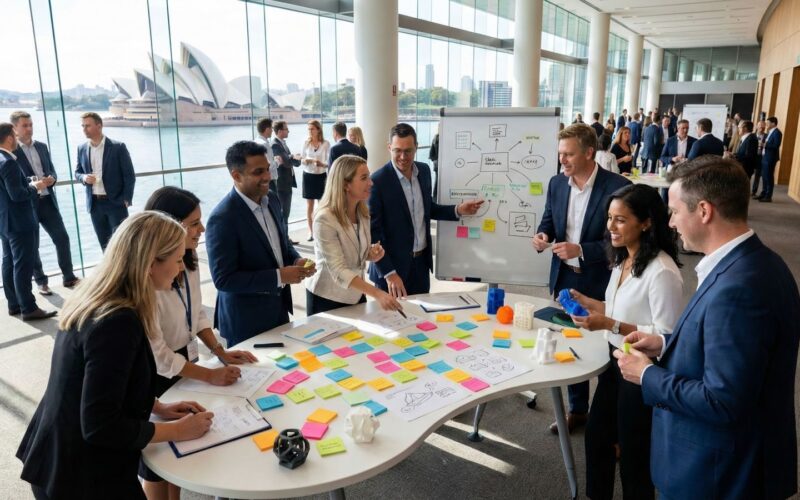
Throughout 2026, Australia will host conferences that bring design thinking directly to business leaders. These events focus on application over theory, with workshops designed for time-pressed executives who need takeaways they can use immediately.
The conferences will be taking place in major cities, making them accessible regardless of where you’re based.
Here are the main design thinking conferences taking place in Australia this year.
Key Takeaways
- Business NSW Regional Leaders in Dubbo (February 5), ICCINDT in Perth (February 17), The Design Conference in Brisbane (June), ICDTDE in Melbourne (July), and UX Australia in Sydney (August) cover the full spectrum of design thinking applications.
- These conferences prioritise hands-on workshops, executive case studies, and real problem-solving over theoretical discussions, delivering tools you can implement immediately.
- Design thinking in software reduces technical debt by 50%, increases user adoption by 60%, and delivers 1.5X ROI by validating problems before coding begins.
- Partnering with experienced teams like Codewave translates conference learnings into measurable outcomes through structured workshops, rapid prototyping, and user-centred development processes.
What Exactly Happens in Design Thinking Conferences?
Design thinking conferences give business leaders practical tools they can use immediately. These events combine workshops, case studies, and peer networking in ways that translate directly to organisational challenges.
The focus stays on application, not theory, with sessions built for executives who need results.
Key Features Include:
- Hands-on Workshops: Complete walk-throughs of the design thinking process, from empathy mapping through to prototype testing with real scenarios.
- Executive Case Studies: C-suite leaders share how they’ve successfully implemented these methods within their organisations and the results achieved.
- Facilitated Problem-Solving: Work through actual business challenges using design thinking frameworks with expert guidance throughout the session.
- Cross-Industry Networking: Connect with leaders facing similar innovation challenges across different sectors.
- Expert Masterclasses: Deep dives into stakeholder buy-in, measuring innovation outcomes, and embedding design thinking within corporate culture.
- Rapid Prototyping Labs: Equipped spaces where you can build and test ideas during the conference with tools and guidance provided.
- Sector-Specific Breakouts: Interactive sessions focused on technology, finance, healthcare, and professional services with tailored examples.
- Implementation Resources: Toolkits, templates, and frameworks you can bring back to your team for immediate application.
5 Must-attend Design Thinking Conferences in Australia in 2026
Across Australia, a small set of conferences continues to shape how organisations think, plan, and decide. These gatherings favour clarity and disciplined creativity over spectacle.
Each event below offers a distinct lens on design thinking, grounded in leadership reality and long-term value.
1. International Conference on Creativity, Innovation, and Design Thinking (ICCINDT)
Perth welcomes this international gathering on 17th February 2026, bringing together academics, researchers, and business practitioners from across the globe.
The conference bridges theory and practice, offering insights into how design thinking evolves across different cultural and organisational contexts.
Key Attractions:
- Global Perspectives: International speakers share how design thinking adapts across different markets, cultures, and regulatory environments.
- Research-Backed Methods: Academic presentations translate cutting-edge research into actionable frameworks for business application.
- Cross-Disciplinary Sessions: Engineers, designers, strategists, and executives collaborate on solving complex organisational challenges together.
- Published Proceedings: Conference papers provide ongoing reference material for implementing evidence-based innovation practices.
2. The Design Conference (TDC)
Brisbane Powerhouse hosts this three-day event from 17th to 19th June 2026, blending keynote talks, panel discussions, workshops, and artist showcases. The conference takes an expansive view of design thinking, connecting it to broader creative practices and cultural movements.
Key Attractions:
- Keynote Thought Leaders: Industry pioneers share how design thinking has transformed their organisations and influenced entire sectors.
- Interactive Panel Discussions: C-suite executives debate real challenges, offering candid insights into what works and what doesn’t.
- Hands-On Workshops: Practical sessions where you learn specific techniques like service blueprinting, empathy mapping, and rapid ideation.
- Artist Showcases: Creative demonstrations that reveal how artistic thinking translates into business innovation and problem-solving.
3. International Conference on Design Thinking Approaches in Engineering (ICDTDE)
Melbourne hosts this specialised conference on 27th July 2026, focusing specifically on how engineering organisations apply design thinking principles. This event attracts CTOs, engineering directors, and technical leaders who need to balance innovation with rigorous technical constraints.
Key Attractions:
- Engineering-Specific Applications: Case studies from manufacturing, software development, infrastructure, and product engineering sectors.
- Technical Integration Methods: Learn how design thinking works alongside existing engineering processes like Six Sigma and lean methodologies.
- Innovation in Constrained Environments: Strategies for maintaining creativity while meeting safety standards, regulatory requirements, and technical specifications.
- Collaborative Problem-Solving: Engineers and designers work together on real technical challenges, bridging the gap between disciplines.
4. UX Australia 2026
Sydney’s Teachers Federation Conference Centre in Surry Hills hosts UX Australia on 27th and 28th August 2026.
This conference deeply integrates design thinking principles into user experience practice, attracting product leaders, digital strategists, and executives overseeing customer-facing technology.
Key Attractions:
- User Research Deep Dives: Master techniques for gathering genuine customer insights that inform better business decisions.
- Digital Product Workshops: Apply design thinking specifically to web platforms, mobile applications, and digital service design.
- Customer Journey Excellence: Learn how leading Australian organisations map and improve experiences across multiple touchpoints.
- Compact Intensive Format: Two focused days deliver maximum learning without extended time away from your organisation.
5. Business NSW Regional Leaders Summit 2026
Dubbo is hosting this regional leadership event on 5th February 2026, bringing design thinking specifically to business leaders outside metropolitan areas. The summit addresses unique challenges regional organisations face when implementing innovation frameworks with limited resources and smaller teams.
Key Attractions:
- Regional Business Focus: Case studies from organisations operating in regional Australia, showing practical applications without enterprise-level budgets.
- Accessible Innovation Methods: Frameworks adapted for smaller teams and regional market conditions while maintaining effectiveness.
- Regional Networking: Connect with fellow business leaders from across NSW who understand the specific challenges of operating outside major cities.
- Cost-Effective Implementation: Strategies for adopting design thinking principles that respect budget constraints and resource limitations common in regional businesses.
The Impact of Design Thinking in Software Development in 2026
Design thinking is not a new concept in software development. But it’s increasingly becoming the difference between products that users tolerate and products they genuinely love.
Traditional development cycles often prioritise technical feasibility and business requirements, leaving user needs as an afterthought. Design thinking flips this sequence, starting with deep empathy for the people who’ll use the software every day.
The result is code that solves real problems instead of imagined ones and interfaces that feel intuitive rather than learned.
Key Impacts Include:
- Faster Problem Validation: Teams identify whether they’re solving the right problem before writing significant code, reducing wasted development cycles and costly pivots.
- Reduced Technical Debt: User research reveals which features genuinely add value, preventing the accumulation of unused functionality that complicates future maintenance.
- Cross-Functional Collaboration: Developers, designers, and business stakeholders work together from day one, eliminating the silos that cause miscommunication and rework.
- User-Centred Architecture: System design decisions stem from observed user behaviour rather than technical assumptions, creating software that aligns with how people work.
- Continuous Feedback Integration: Rapid prototyping and testing cycles catch usability issues early, when fixes cost hours instead of months to implement.
Design Thinking Done Right With Codewave
Design thinking conferences offer valuable frameworks and inspiration, but the real test comes when you return to your organisation. Implementation separates theory from results, and that’s where having an experienced partner makes the difference.
Codewave has spent years refining how design thinking translates into software that drives measurable business outcomes.
Every project begins with collaborative workshops where we identify the problems your users genuinely face, not the ones you assume they have.
We map out customer journeys, build empathy with your audience, and generate solutions that serve both user needs and business objectives. Rapid prototyping lets us test ideas before committing significant resources, ensuring you invest in features that deliver value.
This approach transforms organisations into adaptive, customer-focused entities capable of turning obstacles into growth opportunities.
What We Offer:
- Product Reimagination: We examine existing solutions through fresh eyes, uncovering user frustrations and opportunities that continuous iteration has missed over time.
- End-to-End Experience Design: From initial user research through interactive prototypes, we craft digital experiences using proven frameworks and modern design tools.
- Hardware Interface Solutions: Design thinking principles apply to embedded systems, creating intuitive GUIs that work within technical constraints while prioritising user needs.
- Concept Validation: Transform early-stage ideas into testable prototypes, using real user feedback to refine concepts before full development begins.
- User Testing Services: Identify friction points and validate design decisions through structured testing with your target audience using professional research tools.
The Outcome:
- 60% higher chances of user adoption through problem-first discovery and validated user flows
- 3× higher engagement using thoughtful gamification tied to real behaviour, not guesswork
- 1.5× ROI on design by aligning experience decisions with revenue and operational goals
- 50% less feature rework through early prototyping, testing, and shared clarity
- 300+ businesses served globally, across startups, SMEs, enterprises, and public sector teams
If clarity, adoption, and measurable outcomes sit high on your agenda, it is time to build with intent.
Start with a Design Thinking Workshop at Codewave and move from ideas to results with confidence.
Frequently Asked Questions
- Which Australian city hosts the most design thinking conferences in 2026?
No single city dominates. Perth hosts ICCINDT in February, Brisbane has The Design Conference in June, Melbourne holds ICDTDE in July, and Sydney features UX Australia in August. The Business Leaders Summit spans multiple cities in November.
- Are these conferences suitable for executives with limited design experience?
Absolutely. Most conferences target business leaders specifically, offering foundational workshops alongside advanced sessions. The focus remains on practical application rather than requiring prior design expertise.
- How long do these conferences typically run?
Event length varies considerably. UX Australia runs two days, The Design Conference spans three days, while the Business Leaders Summit offers compact half-day sessions. ICCINDT and ICDTDE typically run two to three days.
- Can design thinking really reduce software development costs?
Yes. Early problem validation and rapid prototyping catch issues before significant coding begins. Organisations report 50% less feature rework and faster development cycles by identifying the right problems upfront.
- What’s the difference between design thinking and traditional project management?
Traditional project management starts with defined solutions and executes efficiently. Design thinking starts with user problems, explores multiple solutions through prototyping, and validates before committing resources. Both approaches complement each other when combined properly.

Dhanush Shetty is a Software Engineer at Codewave focused on building scalable, high-performance digital applications. He writes on software development, engineering architecture, and emerging technology trends—drawing on hands-on experience delivering cloud-native and mobile solutions for clients across industries.