




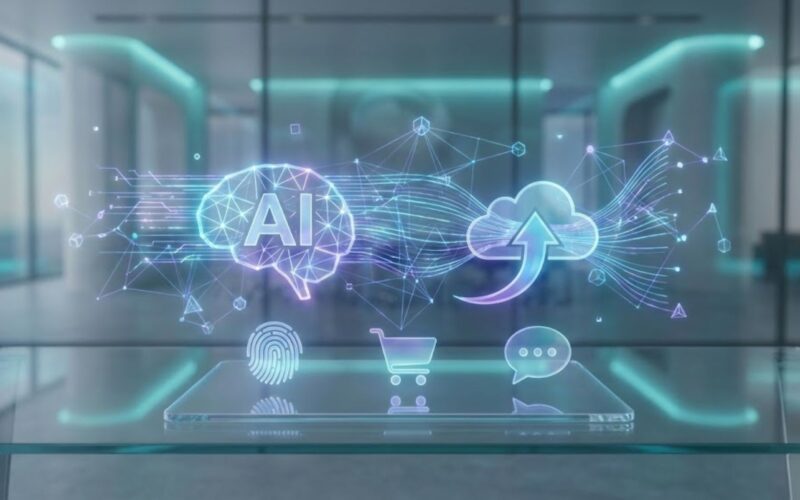
This year’s digital innovations span everything from agentic AI that runs complete workflows to security systems that predict and neutralize threats in real time.
They also include hybrid cloud-edge architectures, human-centric intelligence, and responsible technology practices that directly shape efficiency, trust, and long-term growth.
These trends are rewiring how quickly teams execute, how well costs stay controlled, and how resilient systems remain under pressure. They are solving persistent issues such as delayed decisions, ballooning overhead, growing security gaps, and tools that add complexity instead of clarity.
This blog covers the most salient digital innovations of 2026, explains their strategic importance, and identifies the specific challenges they address.
Key Takeaways:
- Agentic AI manages complete workflows, semantic layers enable system collaboration, and AI-native companies are rewriting the competitive rules with fundamentally different operational models.
- Traditional defenses can’t match AI-powered attacks. Protection now requires intelligent systems that predict threats, adapt in real time, and learn from every attempted breach.
- Hybrid cloud-edge setups process data where it makes the most sense, balancing speed for local operations with cloud scalability for peak demands.
- Augmented intelligence, ambient systems, and spatial computing – all point toward technology that bolsters instead of replacing human capabilities.
- Ethics, sustainability, cultural adaptation, and inclusive design now directly impact customer loyalty, talent acquisition, and investment decisions across every industry.
A Quick Recap of 2025 Digital Trends
Before we dive into what’s ahead, let’s talk about what just happened. 2025 was intense. The digital scene shifted faster than most strategic plans could keep up with, and several technologies have moved from “interesting concept” to “business critical” almost overnight.
The year brought us:
- AI tools integrated into daily workflows – Teams started using them without extensive training sessions or complicated onboarding processes, which changed adoption rates completely.
- Automation platforms handling complex customer interactions – These systems managed nuanced conversations and solved problems independently, moving far beyond the simple chatbot responses we saw before.
- Stricter data privacy regulations – New compliance requirements forced businesses to completely rebuild how they collect, store, and use customer information across all touchpoints.
- Hybrid work technologies that felt natural – Collaboration tools evolved past clunky video calls into environments where remote and in-office teams worked together without constant friction.
- Generative AI becoming a content production staple – Marketing and creative teams incorporated AI-generated content into their regular workflows, speeding up everything from copywriting to design iterations.
- Personalization engines reaching new sophistication – Customer experiences became more tailored without feeling invasive, striking a balance that previous systems struggled to achieve.
These weren’t just upgrades. They changed how customers expect to interact with businesses and how teams collaborate internally.
The companies that adapted quickly gained ground. The ones that waited are now playing catch-up. That momentum carries directly into 2026, where the pace only accelerates.
10 Digital Innovation Trends to Watch Out for in 2026
The next twelve months will reshape operations in ways that feel both exciting and slightly overwhelming. Here’s what’s coming and why it matters for growth, efficiency, and staying competitive.
1. Agentic AI for End-to-End Tasks
Autonomous AI agents are now taking over complete workflows, not just individual tasks. IT budgets reflect this shift. Spending on agentic AI is projected to exceed 26% of worldwide IT investment by 2029, reaching $1.3 trillion as organizations replace manual processes with intelligent systems.
What this means:
- Complete task ownership – AI agents manage entire projects from start to finish, making decisions and adjusting strategies without human intervention at every step.
- Cross-functional coordination – These systems communicate across departments, pulling data and resources from multiple sources to complete complex objectives independently and efficiently.
- Reduced operational bottlenecks – Routine processes that once required multiple approvals and handoffs now happen automatically, freeing teams to focus on strategic work.
- Dynamic problem solving – When obstacles appear, these agents find alternative paths and solutions rather than simply flagging issues for humans to resolve later.
- Learning from outcomes – Each completed task teaches the system something new. Performance improves continuously without additional programming or manual updates from developers.
- Budget reallocation possibilities – Money previously spent on repetitive labor moves toward innovation and growth initiatives. The financial impact compounds over time as efficiency gains multiply.
At Codewave, we build AI agents for SMEs using design thinking principles that put your actual workflows first.
Whether it’s handling refunds, onboarding customers, or proactive support, our agents integrate directly into your existing systems and execute tasks across CRMs, APIs, and internal tools.
With our solutions, businesses experience:
- 50% faster data-driven decision-making through automation.
- 60% reduction in manual effort, freeing up teams for higher-level tasks.
- 3x faster adaptability to changing business needs and market conditions.
Tell us the business outcome you need, and we will design the agentic workforce that delivers it without constant engineering overhead.
Learn more about our agentic AI product design and development services.
2. Semantic Layers Enable Agent Collaboration
Think of semantic layers as translators that help different AI systems understand each other. Without them, agents speak different languages and can’t coordinate effectively.
This infrastructure is becoming the foundation for how AI systems work together, turning isolated tools into collaborative teams.
The technology translates data into a shared meaning that multiple agents can interpret and act on consistently. Companies building this layer now will have AI systems that work together rather than against each other.
What this means:
- Unified data interpretation – Different AI systems read and process information consistently, eliminating the confusion that comes from incompatible formats or conflicting interpretations.
- Smoother cross-platform workflows – Agents from different vendors or internal systems coordinate their actions without requiring extensive custom integration work from development teams.
- Better decision quality – When agents share a common understanding of context and priorities, their combined output becomes more accurate and aligned with business goals.
- Reduced integration costs – Building connections between systems takes less time and money. Technical debt from maintaining multiple custom interfaces starts disappearing from balance sheets.
- Faster deployment cycles – New AI tools plug into existing infrastructure more easily. Teams can test and implement solutions in weeks instead of months or quarters.
- Organizational knowledge preservation – Business logic and institutional understanding get encoded in ways that persist beyond individual employees, protecting against knowledge loss during transitions.
Also read: The Best Agentic AI Frameworks and Tools
3. AI-Native Organizations Emerge
A new breed of company is rising. These organizations don’t add AI to existing processes. They build everything around it from day one. Over 212,000 AI companies operate globally right now, with more than 62,000 AI-focused startups actively competing for market share.
Their operational structures look different, their cost models work differently, and they move faster than traditional competitors
Take operations, for example. Decision-making, routing, and optimization are handled by AI systems in real time, removing layers of approvals and allowing teams to act immediately instead of waiting for manual sign-offs.
The gap between AI-native companies and everyone else is widening quickly.
What this means:
- Competition intensifies across industries – Traditional businesses face pressure from nimble startups that use AI as their core competitive advantage rather than a bolt-on feature.
- New business models appear – AI-native companies use strategies like outcome-based pricing, agent-driven operations, and continuous experimentation at scale, models that legacy organizations cannot support with human-led workflows and rigid systems.
- Talent expectations shift – Professionals increasingly want to work for organizations where AI boosts their capabilities rather than threatens them, changing recruitment dynamics completely.
- Speed advantages compound – These companies iterate and pivot faster because their entire infrastructure supports rapid experimentation. Competitive gaps widen with each product cycle.
- Lower operational overhead – Starting lean with AI handling core functions means smaller teams accomplish more. The traditional relationship between revenue and headcount is breaking down.
- Industry boundaries blur – AI-native companies can enter adjacent markets easily because their technology adapts quickly. A logistics startup can become a supply chain intelligence provider almost overnight.
- Investment patterns are changing – Venture capital flows increasingly toward companies with AI at their foundation. Traditional businesses need compelling transformation stories to attract similar funding levels.
4. AI-Powered Cyber Defense Systems
Attackers are using AI now, and they’re getting sophisticated about it. Around 60% of companies reported experiencing AI-enhanced cyberattacks in the past year, according to BCG.
Traditional security measures can’t keep up when threats adapt and evolve in real time. Defense systems need intelligence that matches or exceeds what attackers deploy.
The security ecosystem is becoming an AI arms race, and falling behind means exposing everything from customer data to operational systems to increasingly clever threats.
What this means:
- Proactive threat detection – AI defense systems identify unusual patterns and potential vulnerabilities before attackers exploit them, moving security from reactive to predictive.
- Adaptive response protocols – When attacks happen, AI systems adjust defenses in real time, closing vulnerabilities and containing threats faster than manual security teams ever could.
- Reduced false positives – Machine learning models distinguish genuine threats from harmless anomalies more accurately, letting security teams focus their energy where it truly matters.
- Attack simulation and testing – AI runs thousands of penetration test scenarios continuously. Weaknesses get discovered and patched before malicious actors find them first.
- Behavioral baseline establishment – Systems learn what normal looks like for every user, device, and application. Deviations trigger immediate investigation without waiting for signature-based detection.
- Threat intelligence sharing – AI platforms communicate across organizations and industries. An attack pattern identified anywhere becomes known everywhere, building collective defense capabilities.
- Compliance automation – Regulatory requirements get monitored and enforced automatically. Audit trails generate themselves, and policy violations get flagged before they become serious problems.
5. People, Skills, and Cultural Adaptation
Technology implementation fails without the human element getting proper attention. Digital innovation demands more than new software and infrastructure. It requires teams who understand why changes matter and how they fit into evolving workflows.
The future of business will depend on the ability to cultivate not only technical expertise but also a mindset that embraces change and encourages continuous learning.
What this means:
- Continuous learning becomes standard – Organizations invest in ongoing training programs rather than one-time sessions, helping teams stay current as tools and capabilities evolve.
- Leadership mindsets shift – Executives support experimentation and accept that innovation includes failures, creating environments where teams feel safe testing new approaches without fear.
- Cross-generational collaboration improves – Companies bridge gaps between digital natives and experienced professionals, blending fresh perspectives with institutional knowledge for better outcomes.
- Role definitions blur – Job descriptions become more fluid as AI handles routine tasks, letting people focus on creative problem-solving and relationship-building that machines can’t replicate.
- Mental health gets prioritized – Organizations recognize that rapid change creates stress and anxiety, building support systems that help people adapt without burning out.
- Communication skills matter more – As AI handles technical execution, the ability to articulate vision, build consensus, and inspire teams becomes the differentiator between good and great leaders.
- Feedback loops tighten – Companies create channels where employees share what’s working and what’s not with new technologies, using that input to refine implementation strategies.
6. Cloud Meets Edge Intelligence
Computing power is moving in two directions at once. Centralized cloud systems handle massive processing and storage. Edge computing brings intelligence closer to where data gets created and used.
This hybrid approach balances speed, security, and scalability in ways that pure cloud or on-premise setups can’t achieve. The combination gives organizations flexibility to process information where it makes the most sense operationally and financially.
Different workloads have different needs, and this architecture accommodates all of them.
What this means:
- Faster response times – Applications process information locally when speed matters, eliminating latency issues that frustrate users and slow down time-sensitive operations.
- Improved data sovereignty – Sensitive information stays on local infrastructure when regulations or security concerns require it, while less critical data moves to the cloud for efficiency.
- Cost optimization – Organizations pay for cloud resources only when needed, using edge computing for baseline operations and scaling up during peak demand without overspending.
- Reliability improves – Local processing continues even when internet connections fail, keeping critical operations running during outages that would cripple cloud-only systems.
- Bandwidth usage drops – Processing data at the edge means sending only relevant insights to central systems rather than streaming massive amounts of raw information constantly.
- IoT capabilities expand – Devices get smarter and more autonomous, making decisions locally and coordinating with other nearby devices without constant cloud communication.
- Geographic flexibility increases – Companies can operate effectively in remote locations with limited connectivity because edge systems can handle local needs independently.
At Codewave, we build hybrid cloud-edge solutions that ensure fast, secure, and cost-effective processing. Our edge computing systems handle local operations, while cloud integration scales when needed, ensuring uninterrupted service.
From smart IoT devices to real-time decision-making, we provide the intelligence needed for efficient workflows.
Check out our portfolio to see how we’ve helped businesses achieve faster, smarter, and more cost-effective solutions.
7. Sustainability, Ethics, and Digital Responsibility in Focus
Sustainability and ethical considerations are no longer optional add-ons. They’re business imperatives that affect brand reputation, customer loyalty, and investment decisions. Customers ask questions about how their data gets used.
Employees want to work for companies whose values align with their own. Investors increasingly evaluate environmental and social impact alongside financial returns.
Organizations that treat ethics and sustainability as afterthoughts risk losing all three groups. The companies poised for success in 2026 are building responsibility into their innovation process from the beginning.
What this means:
- Transparency in AI decisions – Companies explain how algorithms make choices that affect people, building trust by showing the logic behind automated recommendations and actions.
- Carbon footprint tracking – Digital operations get measured for environmental impact just like physical ones, with teams optimizing infrastructure and processes to reduce energy consumption.
- Inclusive design principles – Products and services get built with accessibility and diverse user needs considered from the start, not added as afterthoughts when problems emerge.
- Data minimization practices – Organizations collect only the information they genuinely need, storing it securely and deleting it promptly rather than hoarding everything indefinitely.
- Algorithmic bias testing – Teams regularly audit AI systems for unfair outcomes or discriminatory patterns, fixing issues before they harm real people or damage brand reputation.
- Supply chain accountability – Companies examine the environmental and social impact of their technology vendors, choosing partners whose values align with their own commitments.
- Stakeholder engagement expands – Ethics aren’t decided by executives alone. Organizations bring diverse voices into conversations about how technology should and shouldn’t be used.
- Long-term thinking wins – Decisions get evaluated not just for immediate profit but for sustained positive impact on communities, employees, and the planet.
8. Spatial Computing
Digital content is breaking free from flat screens. Spatial computing blends virtual information with physical environments, changing how people interact with data, products, and spaces.
This goes beyond virtual reality headsets and gaming. Industries from retail to manufacturing are finding practical applications that solve real problems and create genuine value.
The technology has matured enough that implementation costs make sense for more than just experimental projects. We’re entering a phase where spatial computing becomes a standard tool rather than a novelty.
What this means:
- Immersive customer experiences – Retail, real estate, and design industries let customers visualize products in their own spaces before purchasing, reducing returns and increasing satisfaction.
- Better training programs – Employees practice complex procedures in simulated environments that feel realistic, building skills and confidence without real-world risks or expensive equipment.
- Remote collaboration evolves – Teams work together in shared virtual spaces that feel more natural than video calls, improving communication and creativity across distributed workforces.
- Data visualization changes – Complex information becomes easier to understand when displayed spatially. Walking around a 3D financial model reveals patterns that spreadsheets hide.
- Physical spaces get smarter – Warehouses, factories, and offices overlay digital information onto real environments, guiding workers through tasks and highlighting issues needing attention.
- Design iteration accelerates – Architects, engineers, and product designers test concepts in spatial environments before building physical prototypes, catching problems early and saving resources.
- Entertainment boundaries dissolve – Gaming, education, and entertainment blend together as spatial computing creates experiences that are simultaneously fun, informative, and practically useful.
9. Augmented Intelligence
Humans and machines working together create better results than either could alone. Augmented intelligence improves human decision-making rather than replacing it, combining computational power with human judgment, creativity, and emotional understanding.
What this means:
- Better strategic decisions – Executives get AI-generated insights and scenarios that inform their choices without removing human judgment from critical business decisions.
- Creative work amplified – Designers, writers, and strategists use AI to handle repetitive elements while focusing their energy on the innovative aspects only humans can provide.
- Expertise becomes more accessible – Junior team members use AI guidance that helps them perform at higher levels, accelerating professional development and reducing experience gaps.
- Research speeds up dramatically – Scientists and analysts process vast amounts of information quickly, with AI highlighting relevant patterns while humans provide context and interpretation.
- Diagnostic accuracy improves – Healthcare professionals combine their clinical experience with AI analysis of symptoms and medical history, catching conditions earlier and more reliably.
- Customer interactions feel personal – Service teams use AI-powered insights about customer history and preferences to deliver genuinely helpful, contextually appropriate support.
- Risk assessment gets more nuanced – Financial analysts, underwriters, and compliance officers evaluate complex situations faster, with AI flagging concerns while humans make final judgments.
- Learning adapts to individuals – Educational platforms adjust content and pacing based on how each person learns best, with AI providing personalized paths while teachers guide overall progress.
10. Rise of Ambient Intelligence
Invisible, always-on intelligence woven into environments is becoming normal. Ambient systems anticipate needs and adjust settings automatically, creating experiences that feel effortless because the technology fades into the background.
What this means:
- Adaptive workspaces – Office environments adjust lighting, temperature, and resources based on who’s present and what they’re working on, optimizing comfort and productivity automatically.
- Predictive customer service – Systems detect problems and resolve them before customers notice, or reach out proactively with solutions right when someone needs help.
- Context-aware interactions – Devices understand what someone is trying to accomplish and offer relevant suggestions or actions without being explicitly asked.
- Energy efficiency improves – Buildings and facilities optimize power usage constantly, reducing waste without requiring anyone to manually adjust thermostats or switch off unused equipment.
- Health monitoring becomes passive – Wearables and environmental sensors track wellness indicators continuously, alerting people to potential issues before symptoms become serious.
- Security feels frictionless – Authentication happens through natural behaviors and biometrics rather than passwords and security questions, making access both easier and more secure.
- Shopping gets anticipatory – Retail environments recognize returning customers and prepare personalized recommendations or locate items they’re likely looking for without intrusive tracking.
- Meetings run smoother – Conference rooms automatically configure for scheduled sessions, dial in remote participants, and capture action items without anyone fumbling with controls.
Looking Ahead: Your Move in 2026
The innovations shaping 2026 aren’t isolated trends. They’re interconnected shifts that will fundamentally change customer expectations, operational efficiency, and competitive dynamics across every industry. The companies that thrive won’t be the ones with the biggest budgets.
They’ll be the ones that move deliberately, choosing technologies that align with their specific business goals rather than chasing every new development.
Understanding what’s possible is the first step. Knowing what’s right for your organization and executing it well is what separates leaders from followers.
Codewave helps SMEs, C-suite executives, and tech founders turn digital innovation into tangible business outcomes through design-led thinking and agile development. Our approach starts with understanding your challenges, not pushing predetermined solutions.
How can we support your 2026 strategy?
- Custom AI agents built for your workflows – We design and deploy intelligent systems that integrate with your existing tools, handle complex tasks end-to-end, and improve continuously without constant maintenance.
- Design-led implementation – Every solution starts with deep discovery into how your teams work and what your customers need, ensuring technology fits naturally rather than creating new friction points.
- Agile development cycles – Rapid prototyping and iterative releases mean you see value quickly, provide feedback that shapes the final product, and adapt as business needs evolve.
- Code Accelerate resource hub – Access our curated library of advanced coding frameworks, implementation guides, and best practices that accelerate development timelines and reduce technical risk.
The gap between knowing what’s possible and making it work in your business is where most digital transformation efforts stall. We bridge that gap.
Connect with Codewave today to explore how the right innovation strategy can give you a competitive advantage in 2026.
Frequently Asked Questions
- What are the most impactful digital innovation ideas for 2026?
Agentic AI for end-to-end workflows, AI-powered cybersecurity, hybrid cloud-edge computing, and spatial computing top the list. These technologies solve real operational problems while creating new competitive advantages.
- How do I know which digital innovations are right for my business?
Start by identifying your biggest operational bottlenecks and customer pain points. Choose innovations that directly address those specific challenges rather than chasing trends that sound impressive but don’t align with your goals.
- What’s the difference between AI automation and agentic AI?
Traditional automation follows predetermined rules for specific tasks. Agentic AI manages complete workflows, makes decisions, adapts strategies when obstacles appear, and learns from outcomes without constant human oversight.
- How much should companies budget for digital innovation in 2026?
It varies by industry and size, but successful organizations balance innovation investment with operational stability. Focus on technologies that solve specific problems and deliver measurable ROI rather than following fixed budget percentages.
- Why do so many digital transformation projects fail?
Most failures happen because organizations focus on technology while neglecting the human element. Teams need to understand why changes matter, receive ongoing training, and work in cultures that support experimentation and adaptation.

Rakshith D is a Software Engineer at Codewave with expertise in full-stack development, cloud-native architectures, and scalable digital systems. He writes on web and mobile app development, microservices, and backend engineering—drawing from hands-on experience building high-impact digital products for startups and enterprises.