Introduction
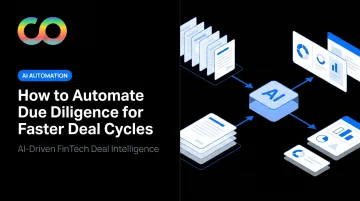
Traditional due diligence is slow by design, and in competitive M&A markets, that slowness costs deals. According to DFIN Solutions, initial M&A diligence phases typically run 30-60 days, with complex or regulated transactions pushing well past 90 days. Document overload, manual review queues, and fragmented handoffs between teams are the primary culprits.
Automation can compress these timelines, but results vary based on which workflow stages you target, the quality of your document inputs, the tools you deploy, and how well human oversight is maintained throughout.
This article covers the exact steps to automate due diligence, what needs to be in place before you start, the variables that most affect speed, and the mistakes that derail automation efforts before they deliver value.
Key Takeaways
- Automation works best on high-volume, rule-based tasks — not strategic judgment calls
- Speed gains depend on data quality, integration depth, and proper escalation thresholds
- Start with the most document-heavy workflow and expand incrementally
- Compliance and audit trail requirements must be built in from day one, not retrofitted after deployment
- Human reviewers remain essential for interpreting flagged risks and finalizing decisions
How to Automate Due Diligence for Faster Deal Cycles
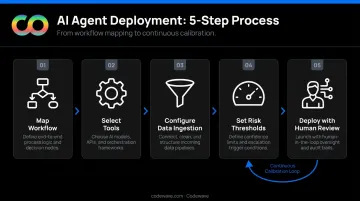
Step 1: Map Your Current Due Diligence Workflow
Before selecting any tools, document every stage of your current process: document collection, financial review, legal and compliance checks, third-party risk assessment, and reporting. Note which steps consume the most analyst hours.
Then classify each task by automation suitability:
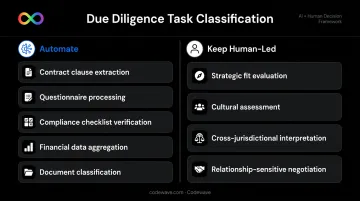
- Strong automation candidates: Contract clause extraction, questionnaire processing, compliance checklist verification, financial data aggregation, document classification
- Keep human-led: Strategic fit evaluation, cultural assessment, cross-jurisdictional interpretation, relationship-sensitive negotiation
Pay particular attention to hand-off points — where one team passes work to another. These are often the largest source of delay and miscommunication in deal cycles, and targeted automation can address them directly without touching the judgment-intensive work downstream.
Step 2: Select the Right Automation Tools for Your Deal Type
Tool selection should match your specific deal context, not just general capability:
| Deal Type | Priority Features |
|---|---|
| M&A | Document review AI, data room integration, financial statement extraction |
| Vendor due diligence | Questionnaire automation, third-party risk scoring |
| Compliance-heavy industries | Regulatory monitoring, audit trail functionality, SOC 2/GDPR/SOX mapping |
Look for platforms that combine NLP-based contract analysis, OCR for unstructured documents, and integration with your existing CRM, data room, and legal tools. Standalone document readers that don't connect to your workflow create new handoffs rather than eliminating them.
One non-negotiable: confirm that any tool produces explainable outputs with source citations — not just risk scores. Regulators and deal counterparties require documentation of how conclusions were reached, not just what they are.
Step 3: Configure Data Ingestion and Document Standardization
This step determines whether automation accelerates your review or creates a new class of problems. Get three things right before any AI model touches your documents:
- Standardize formats first: Contracts, financial statements, compliance certificates, and questionnaires must arrive in consistent, machine-readable structures before extraction begins.
- Automate ingestion from source: Pull documents directly from data rooms, email, and shared drives into the automation layer — manual uploads reintroduce the delays you're trying to eliminate.
- Validate at ingestion, not after: Build data validation rules at the intake stage. Incomplete or inconsistent inputs produce unreliable AI outputs, which then require more human correction time than the original manual process would have.
Codewave's document processing pipeline methodology addresses this directly: their architecture-first approach designs ingestion pipelines, preprocessing stages, extraction flows, and validation layers before implementation begins — with confidence scoring built in to flag low-quality extractions before they propagate downstream.
Step 4: Build Automation Rules, Risk Thresholds, and Escalation Logic
Configure your system with your organization's specific risk taxonomy. Define which clause types, financial ratios, or compliance gaps trigger a flag, and at what severity level. Without this specificity, the system either flags everything (creating a review bottleneck) or flags too little (missing genuine risks).
Set escalation rules that route flagged items to the right human reviewers automatically. Faster extraction only produces faster decisions when reviewers land in a sorted, prioritized queue — not a single undifferentiated pile.
For compliance-sensitive environments, map each document type against the applicable regulatory framework — SOC 2, GDPR, HIPAA, SOX — and configure the system accordingly. Automation without compliance mapping creates legal exposure, particularly in industries subject to audit.
Step 5: Deploy with Human-in-the-Loop Review Checkpoints
Launch on a single workflow type first — contract review, questionnaire processing, or financial statement extraction. Full pipeline automation upfront is the most common deployment mistake.
Design the review workflow so AI handles extraction and initial risk flagging while experienced analysts focus only on flagged items and final decisions — not re-reading entire document sets. Thomson Reuters reports that AI may reduce M&A document review time by up to 70%, but that reduction only materializes if reviewers genuinely stop reading what the AI has already cleared.
Establish a structured feedback loop: reviewers should mark AI outputs as accurate, inaccurate, or incomplete. Each correction sharpens the model's accuracy on your specific document types and risk taxonomy — building measurable reliability, not just general capability. Tools like Label Studio can capture these corrections and feed them back into retraining pipelines — the approach Codewave uses in its document processing implementations to drive continuous accuracy improvement.
When Should You Automate Due Diligence?
Automation delivers the strongest return when:
- Running high deal volume — a PE fund managing 50 simultaneous deal tracks gains far more than a team evaluating 5 deals a year
- Processing large document sets — a mid-sized M&A transaction can generate 5,000 to 50,000 documents in a virtual data room
- Experiencing manual backlogs — if your team regularly misses review cycle deadlines, adding headcount won't close the gap
That said, automation isn't the right fit for every deal. Approach it with caution in these situations:
- Highly bespoke deals requiring heavy contextual judgment
- Early-stage targets with incomplete or inconsistent financial records
- Jurisdictions where regulatory frameworks are unsettled enough that automated compliance mapping may produce false confidence
The pattern holds across deal types: standardized, high-volume document sets are where automation pays back fastest — and where teams running manual processes fall furthest behind.
What You Need Before Automating Due Diligence
Preparation quality directly determines whether automation accelerates deal cycles or creates new bottlenecks. Rushed implementation produces bad outputs, not faster deals.
Data and Document Readiness
Assess your current document inventory honestly:
- Are financial statements, contracts, and compliance records stored digitally in consistent formats?
- Do legacy documents exist only as scanned PDFs or physical files requiring prior OCR and digitization?
- Are naming conventions consistent across document sets, or will the system encounter fragmented inputs from day one?
Automation cannot reliably process documents that haven't been digitized and structured. Digitization and consistent formatting are prerequisites — they're what the AI model actually runs on.
Technology and Integration Infrastructure
Confirm your existing data room, CRM, and legal tools have API access that allows the automation layer to connect without creating new manual handoffs. If your current stack doesn't support integration, middleware will need to be built or configured before deployment.
This is where a development partner typically saves weeks compared to an in-house buildout. Codewave has built automated data pipelines with OAuth authentication, ETL automation, and multi-system synchronization for fintech and financial services environments, handling the integration complexity that routinely blocks internal teams.
Compliance and Governance Framework
Define accountability before deploying:
- Who owns AI-generated findings?
- How are model errors or disputed outputs resolved?
- What documentation standards apply to AI-assisted reviews?
Deploying automation without a governance layer creates regulatory exposure in industries subject to GDPR, CCPA, SOX, or HIPAA. Audit trails, explainability mechanisms, and source citations must be built into the system architecture from the start, not added later once problems surface.
Key Parameters That Affect Deal Cycle Speed
Not all automation setups produce the same speed gains. These are the variables that determine whether your deal cycle compresses by days or by weeks.
Document Volume and Complexity
AI models perform best on standardized, text-based documents. Deals involving chart-heavy financials, multi-language contracts, or scanned legacy files require additional preprocessing that adds processing time and increases the likelihood of extraction errors requiring human correction.
Prioritize automation on the cleanest, most standardized document categories first. Let accuracy build before expanding to complex or multilingual document sets.
Data Quality and Consistency
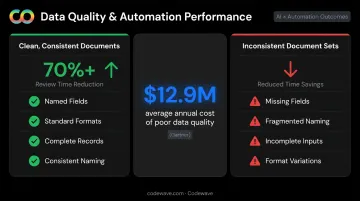
Inconsistent naming conventions, missing fields, or incomplete source documents force the system to flag exceptions rather than extract cleanly. Gartner estimates poor data quality costs organizations an average of $12.9 million per year in enterprise contexts — and in a due diligence pipeline, data quality problems don't just cost money, they add review time back at exactly the wrong moment.
In practice, a clean and consistently structured document set can deliver 70%+ review time reduction. An inconsistent set with missing fields erodes that advantage quickly, as exception queues route back to human reviewers and stall the pipeline.
Integration Depth with Existing Workflows
Automation that requires manual document uploads, copy-paste between systems, or disconnected reporting tools gives back a significant portion of its time savings in micro-delays. Legal professionals already spend 66.2% of their working day in email as a task and project management tool — shallow integration simply reproduces this fragmentation inside a new tool.
Deep integration with data rooms, CRM, and communication tools is what converts AI processing speed into actual deal cycle speed.
Human Review Threshold Configuration
If escalation thresholds are set too low, too many items get flagged and the bottleneck shifts from document reading to review queue management. Set too high, genuine risks get missed.
The right calibration varies by deal type and risk appetite. Strategic acquirers often configure tighter thresholds given integration complexity; PE firms with high deal volume may accept slightly wider thresholds in exchange for throughput. The most common misconfiguration is straightforward — teams start with default settings and never adjust them based on actual reviewer feedback, leaving escalation logic misaligned with their real risk tolerance.
Common Mistakes When Automating Due Diligence
Skipping document standardization before deployment. AI models are only as reliable as their inputs. Teams that onboard automation tools before ensuring consistent, machine-readable document formats spend more time correcting outputs than reviewing documents manually.
Automating judgment-intensive tasks too early. Extending automation to complex risk assessments, strategic fit evaluations, or negotiation points creates false confidence and misses nuances that experienced reviewers catch. The goal is to free human attention for decisions that require context — not to eliminate it.
Ignoring audit trail requirements at setup. Many teams configure automation for speed without documenting how findings were generated. In regulated environments, a risk flag with no traceable reasoning is often worse than no flag at all — explainability and source citations must be built in from the start to satisfy frameworks like NIST AI RMF and EU AI Act Article 12.
Treating automation as a one-time implementation. Due diligence automation degrades over time if not maintained. Regulatory requirements change, document formats evolve, deal complexity shifts. The system needs ongoing calibration, user feedback loops, and periodic governance reviews to continue delivering speed without sacrificing accuracy.
Conclusion
Speed gains from due diligence automation depend almost entirely on what's in place before the automation runs. Clean data, integrated systems, properly configured risk thresholds, and human oversight at the right workflow points — these aren't optional prerequisites. They're the difference between automation that accelerates deal cycles and automation that creates a faster path to bad decisions.
Most automation failures trace back to poor preparation or scope creep — not the technology itself. Teams that consistently see faster deal cycles share a common approach:
- Start with the highest-volume, most standardized workflows
- Expand automation incrementally as each stage proves reliable
- Reserve analyst time for judgment calls that require context, not just data
The goal is to automate the right workflows well enough that your analysts focus on decisions only they can make.
Frequently Asked Questions
What types of due diligence tasks are best suited for automation?
Document extraction, contract clause review, compliance checklist verification, questionnaire processing, and financial data aggregation are high-fit automation tasks. Strategic judgment, relationship management, and cross-jurisdictional regulatory interpretation still require human expertise — AI accelerates the former so analysts can focus on the latter.
How much time can due diligence automation realistically save per deal?
Thomson Reuters reports AI may reduce document review time by up to 70%, with Travers Smith citing up to 90% reduction in actual review time for law firm deployments. Actual savings depend on document volume, integration depth, and how efficient your current manual baseline is.
Do you need a large in-house tech team to implement due diligence automation?
Off-the-shelf tools lower the barrier considerably, but custom integrations with existing deal management systems typically require development support. An implementation partner accelerates deployment and sidesteps the common pitfall of building middleware from scratch without domain-specific expertise.
Can AI replace human judgment in due diligence entirely?
No — and teams that try find out quickly. Current AI handles processing-intensive tasks well but lacks the contextual judgment, regulatory nuance, and relationship intelligence human reviewers bring. The strongest outcomes come from human-AI collaboration: AI clears the volume, humans handle the complexity.
What are the biggest compliance risks of automating due diligence?
Lack of audit trails, unexplainable AI outputs, and failure to map outputs to specific regulatory frameworks (GDPR, SOX, HIPAA) are the primary risks. Compliance infrastructure — logging, source citations, explainability — must be built into the automation design from the start, not retrofitted when regulators come calling.
How do you measure ROI on due diligence automation?
Track time-to-assessment completion, deals evaluated per analyst per quarter, error rates versus manual review, and compliance gap closure time. ROI typically compounds as the system learns from reviewer feedback — early deals establish your baseline, and performance improves from there.